
Deer Tick’s Two-Year Life Cycle
We are focusing on the Deer Tick’s two-year life cycle, breaking down each of the separate stages and sharing pictures and fun facts about each phase, from egg to egg-laying female.
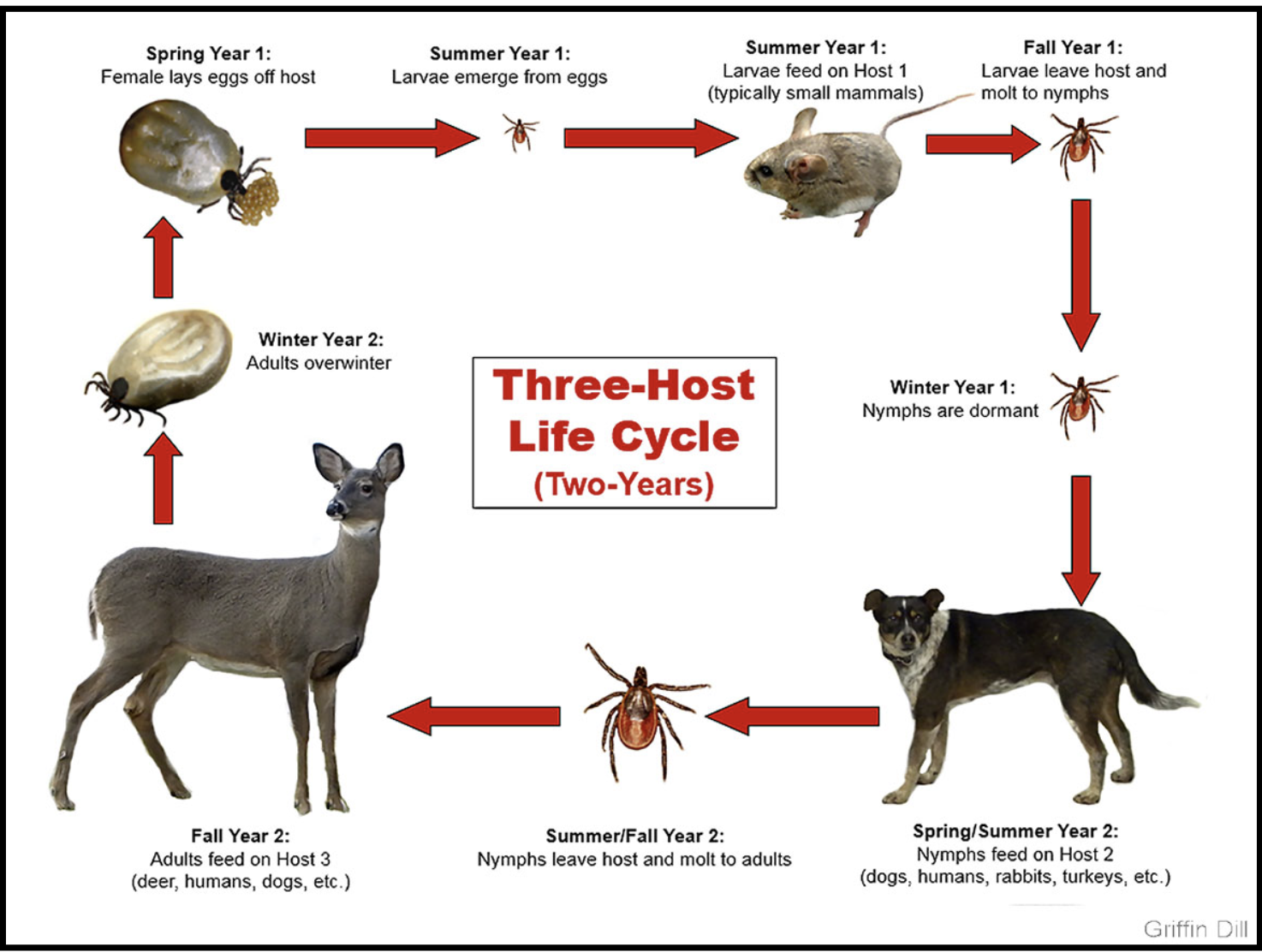
Charts of tick life cycles make me dizzy and frustrated. In case that happens to you, I’ve included three charts in this Tidbit, hoping one of them will make sense to you. The trick is to go through the cycle slowly - thus reducing any vertiginous effect. Here we go!
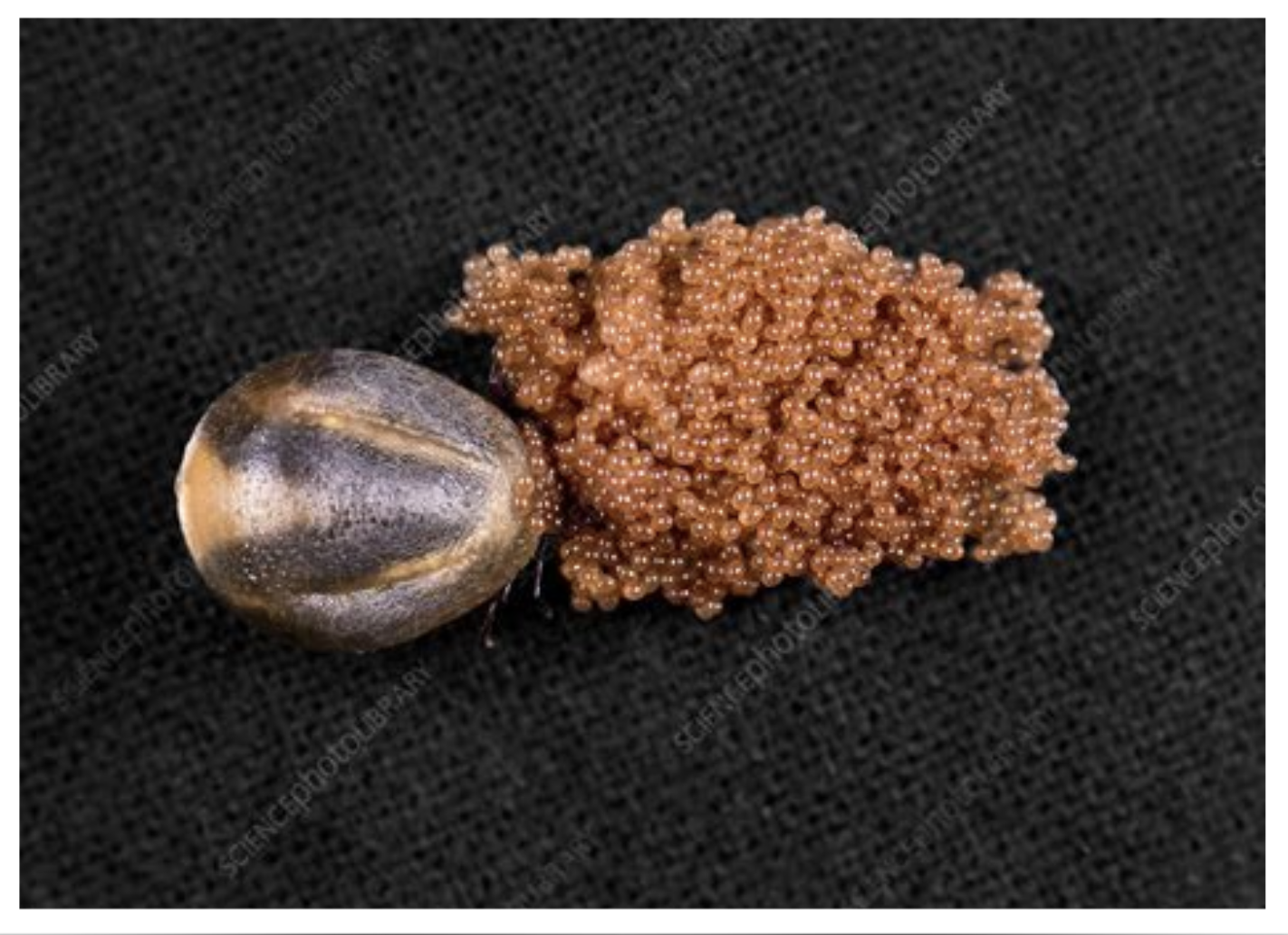
Spring, Year #1
Mamma Tick Drops off her host and lays her eggs. (Usually more than a thousand of them.) Tick egg-laying in springtime is influenced by warm, moist environments with leaf litter or soft ground cover that protect eggs from drying out.
Once Mamma Tick has done her job of producing and laying all those eggs, she has expended so much energy in the process, she dies. Brava, Mamma! And Papa tick also dies after mating, so - alas! - these thousands of eggs are orphans. Personally I have no sympathy for them at all! Do you?
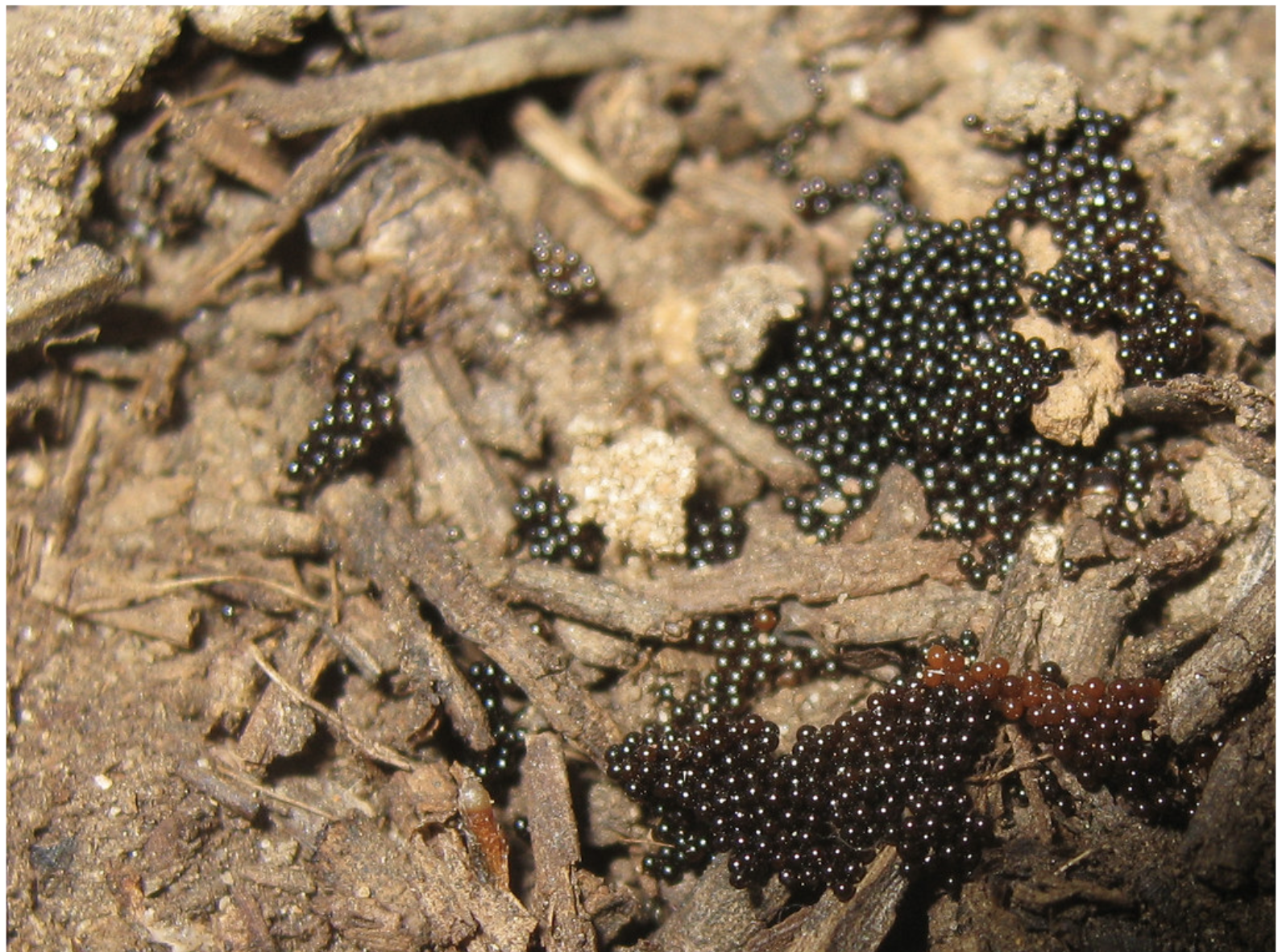
Summer, Year #1
The thousands of orphans eggs remain in the area where their mother laid them, usually where a likely first host, like a white footed mouse, will be available. Temperature and humidity primarily affect deer tick egg hatching times, with warmer and more moist conditions speeding up hatching. Duration of development is estimated to be between 7 and 38 days, although in some cases it could be longer.
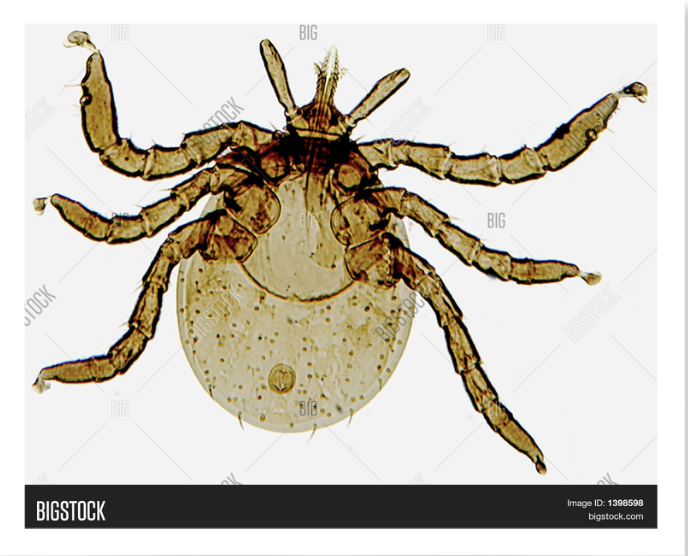
Deer tick larvae (they have 6 legs) find their host by clinging to vegetation and using their sensory organs to detect changes in carbon dioxide, heat, and physical disturbances from passing animals.
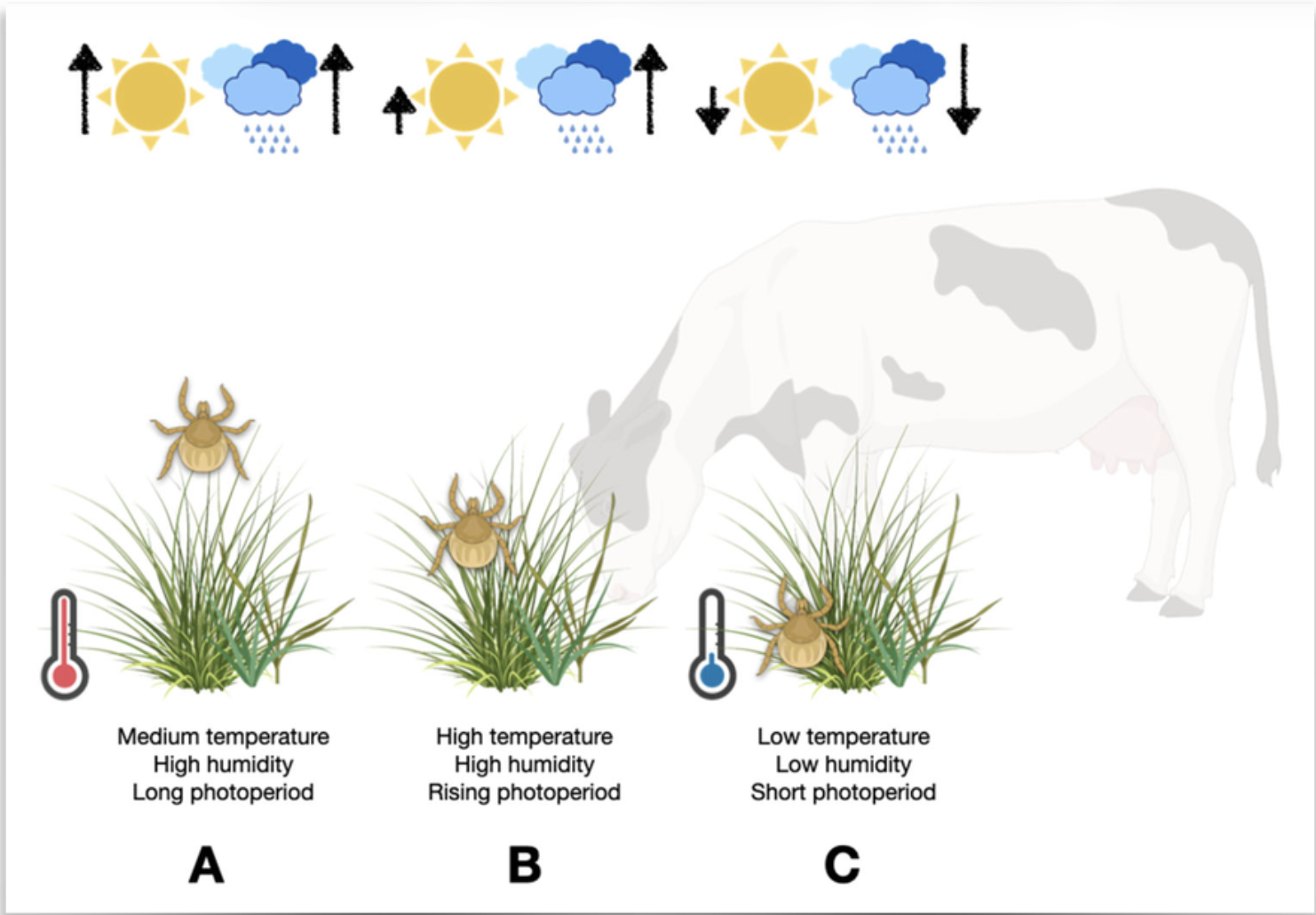
Once a suitable unsuspecting host - usually a mouse or a small mammal like a shrew, chipmunk, vole - comes close enough, the larvae attach themselves to feed. This process is crucial for their survival, as they require a blood meal to progress to the next (nymph) stage of their life cycle. Once they have fed from the host, they detach and molt into nymphs.
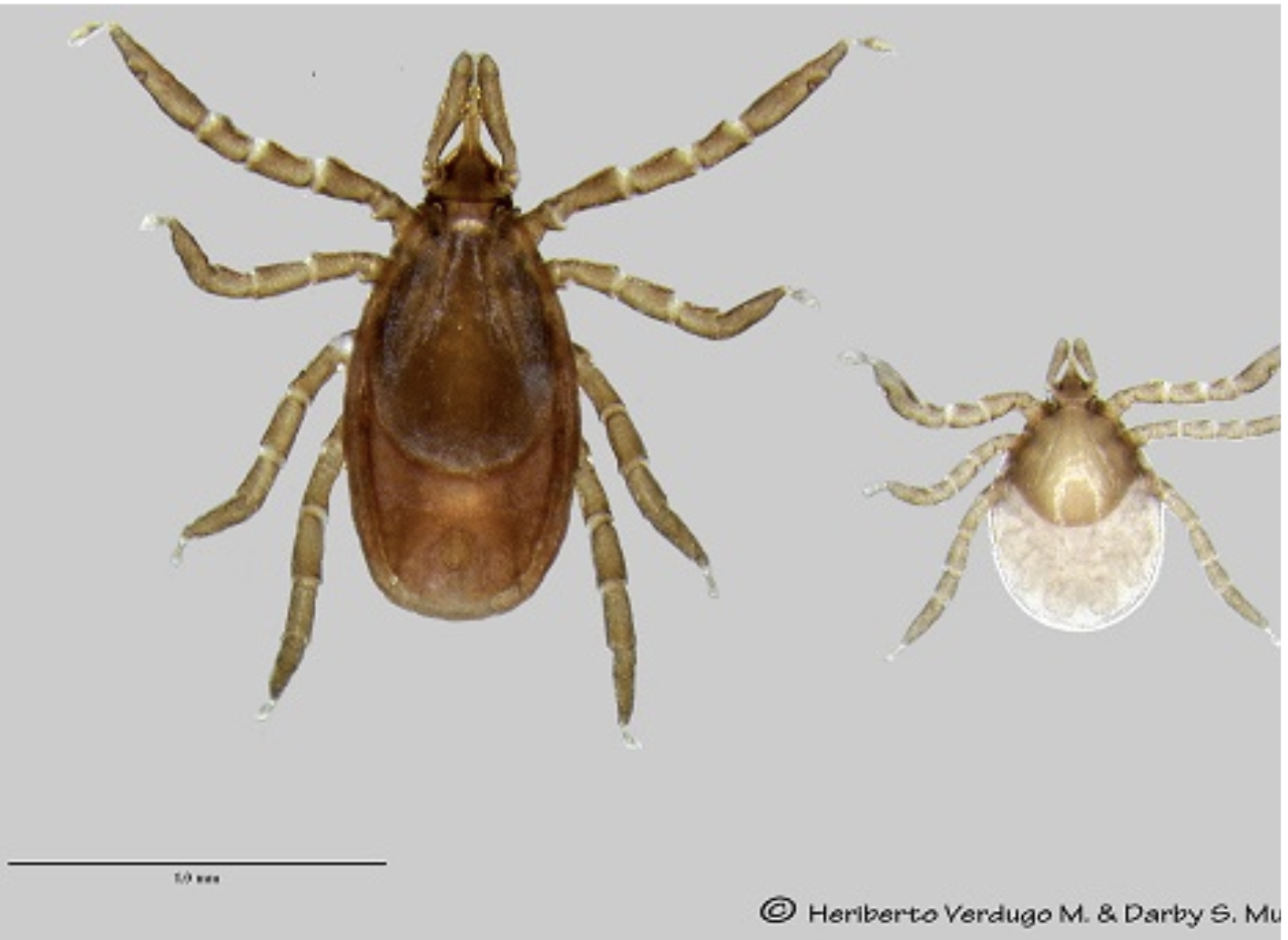
Fall, Year #1 — Nymph Deer tick and Larva Deer tick
Deer tick larvae have six legs, while nymphs have eight legs. Additionally, nymphs are generally larger and more developed than larvae, which are smaller and less mature. Both larvae and nymphs possess mouthparts adapted for feeding, but nymphs have more developed structures that allow them to feed on larger hosts. It takes about several months for a larval deer tick to develop into a nymph, typically transitioning during the fall (sometimes spring) after hatching.
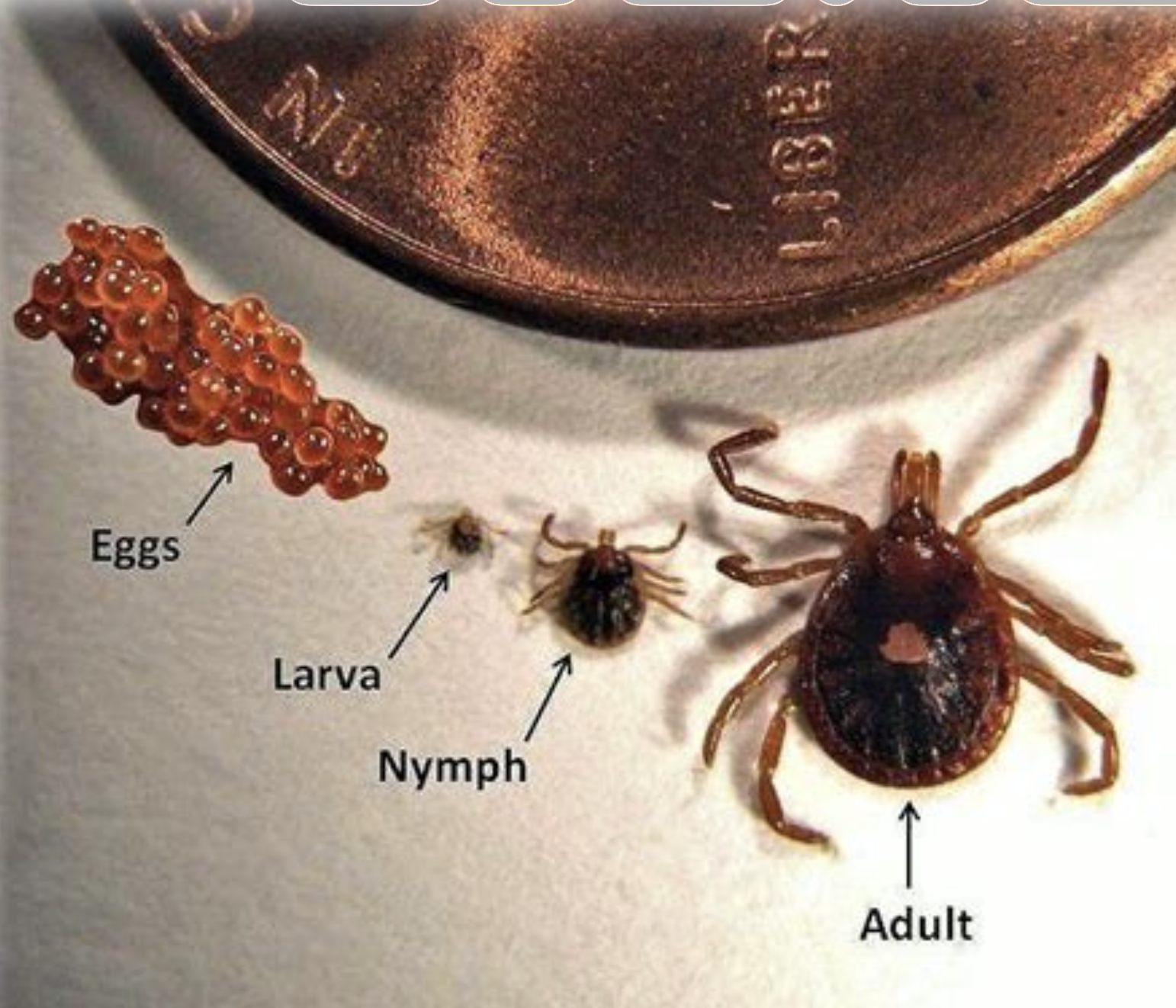
Winter, Year #1
During the first winter, the nymph stays dormant.
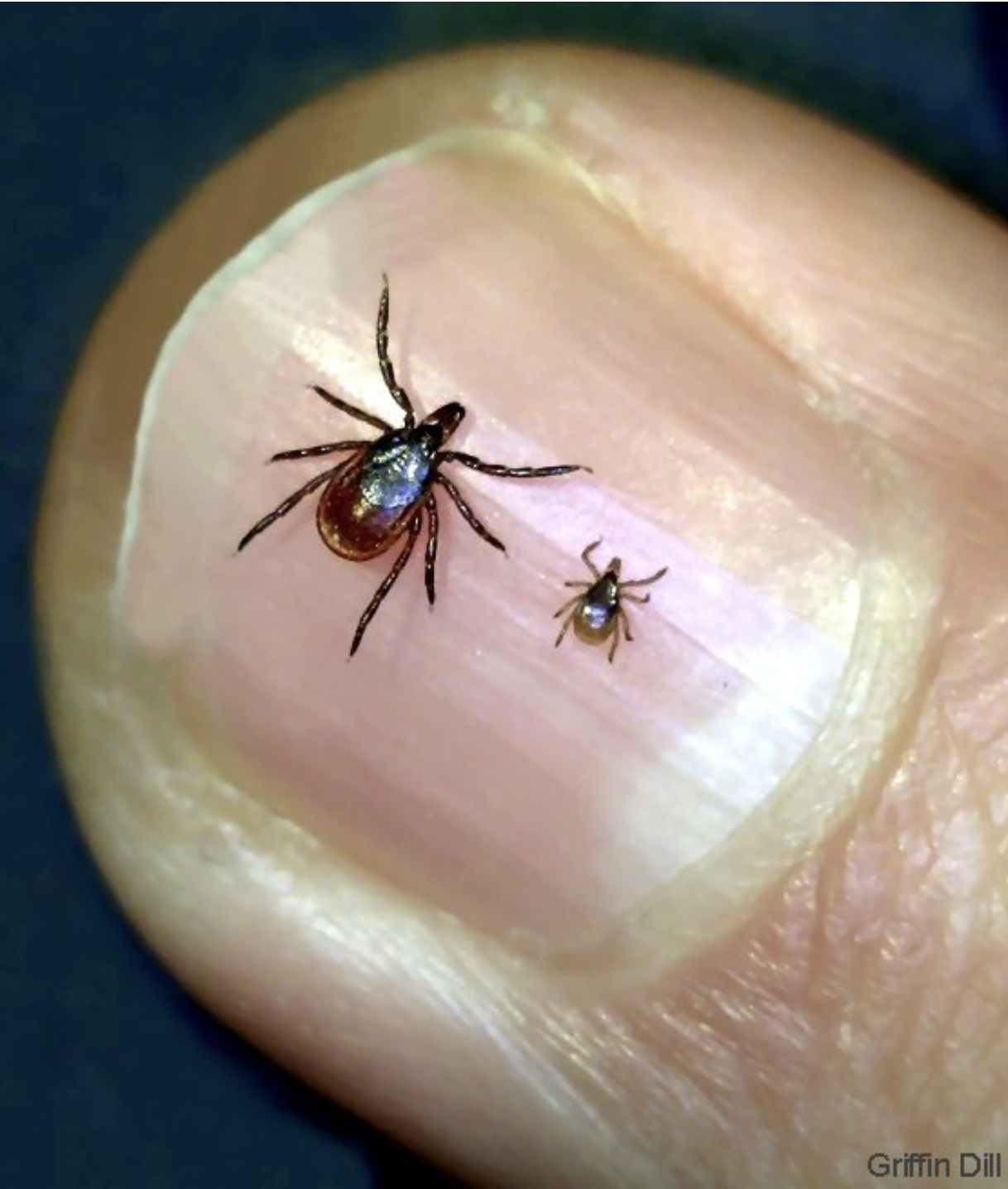
Deer Tick adult (l) nymph (r) size comparison
Spring/Summer, Year #2
In the Spring of Year #2, the nymph wakes up and quests for a second host - like dogs, humans, rabbits, turkeys. The chart below shows a typical feeding times and sizes for the nymph while they are on their second host.
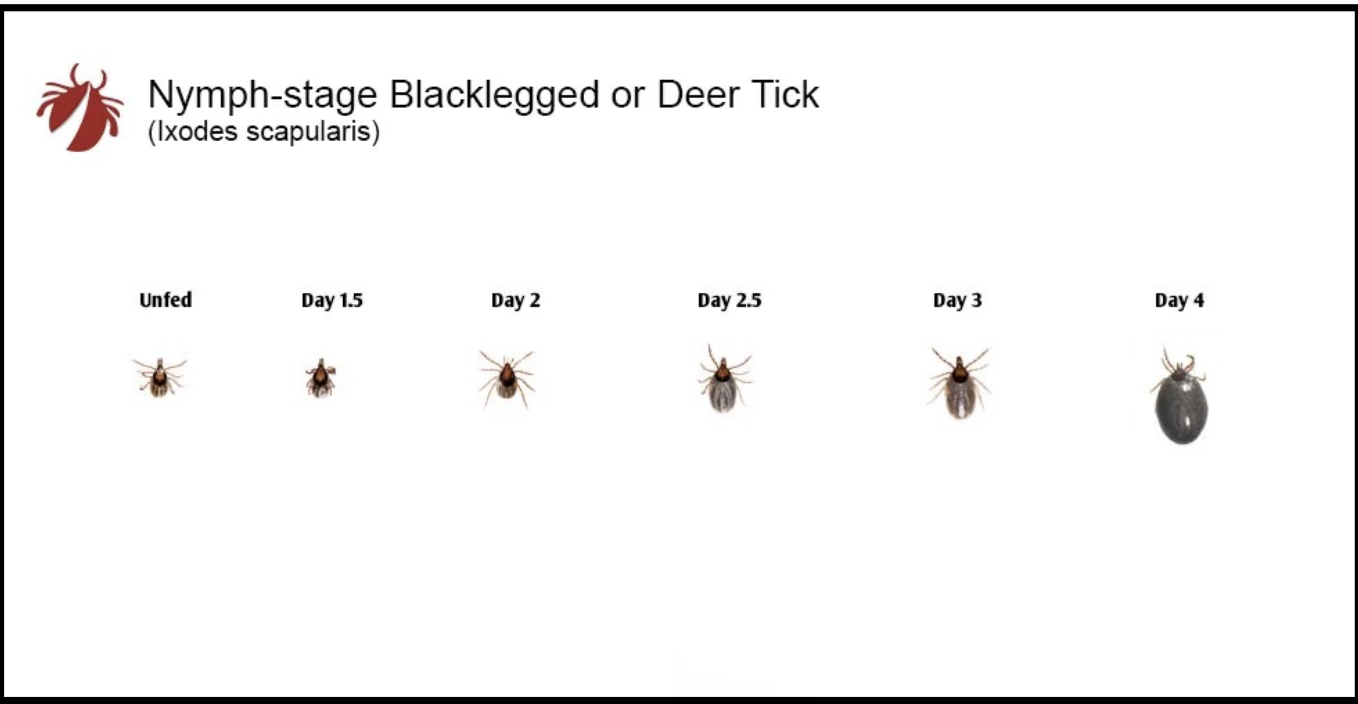
After feeding, the nymph detaches from the host and again becomes dormant. Nymphs that became infected with disease-causing bacteria during their larva stage can transmit these pathogens to hosts such as humans or pets at this point in their life cycle, leading to serious conditions such as Lyme disease. Furthermore, uninfected nymphs can pick up dangerous bacteria from infected hosts such as deer, which can then be transmitted later during their adult stage.
Summer and Fall of Year #2
After feeding, nymphs will transition into adults by fall or winter. During this final stage of their life, they will again seek out a blood meal as females in particular prepare to reproduce. Hungry adult ticks that became infected with disease - causing bacteria during their larva or nymph stage can still transmit these pathogens to hosts at this phase as well, making tick prevention important even during the winter months - if temperatures are mild enough for tick activity. After feeding, adult ticks will mate, with males typically dying after mating with one or two females.
Spring, Year #2
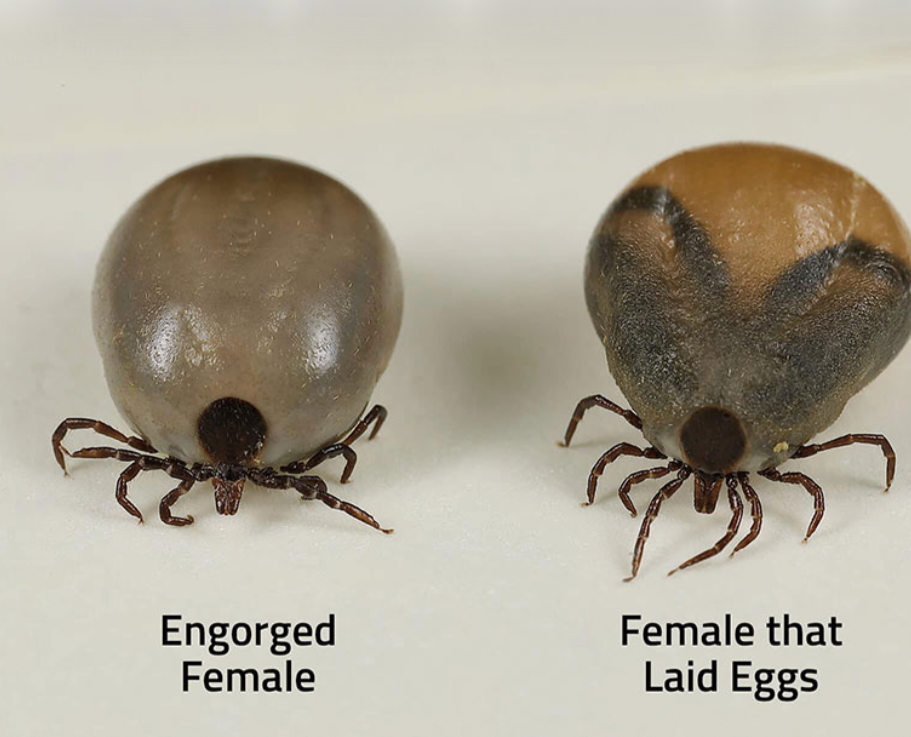
Adults females who have mated will then lay thousands of eggs during the spring before dying soon after, as a new generation of ticks begin their life cycle.
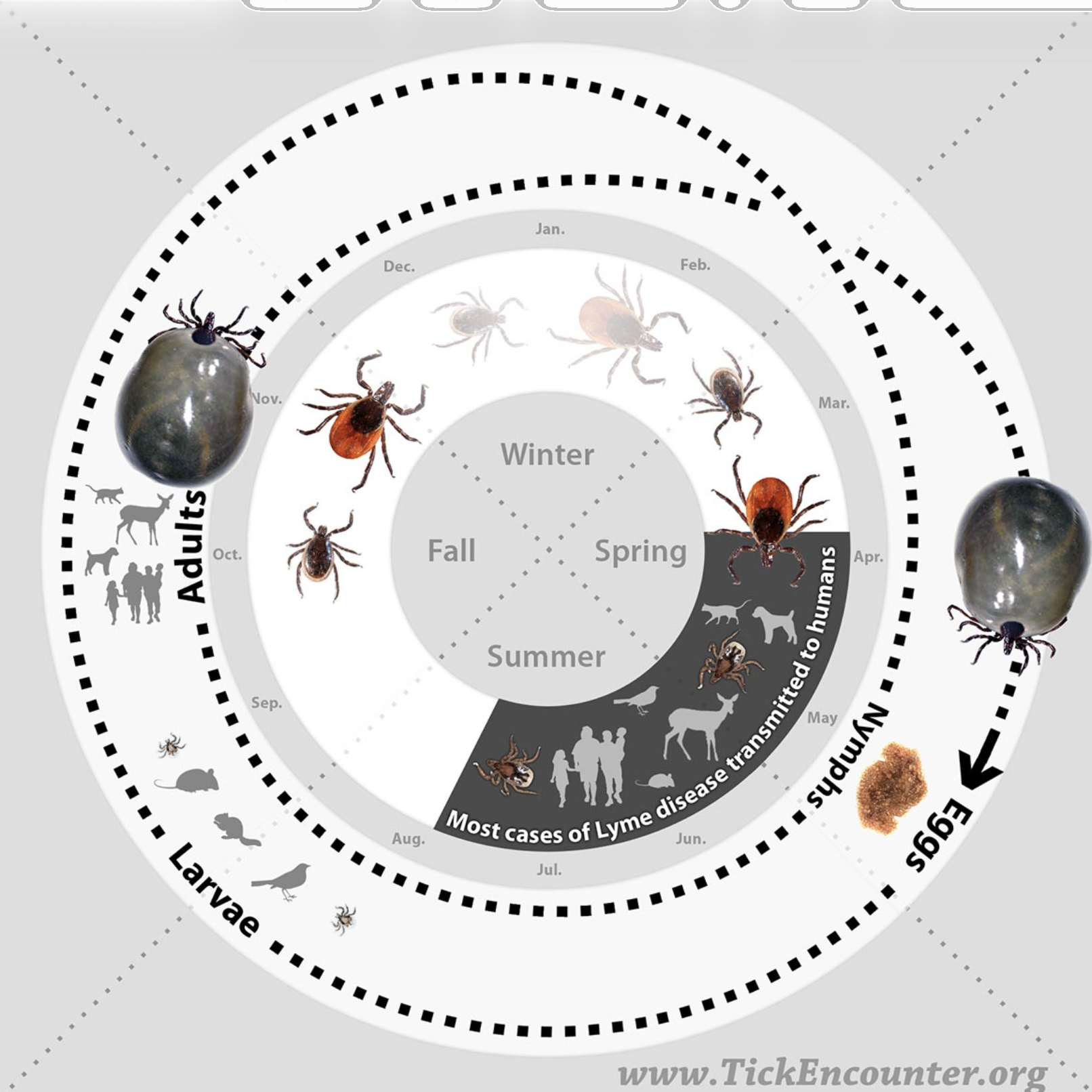
To recapitulate:
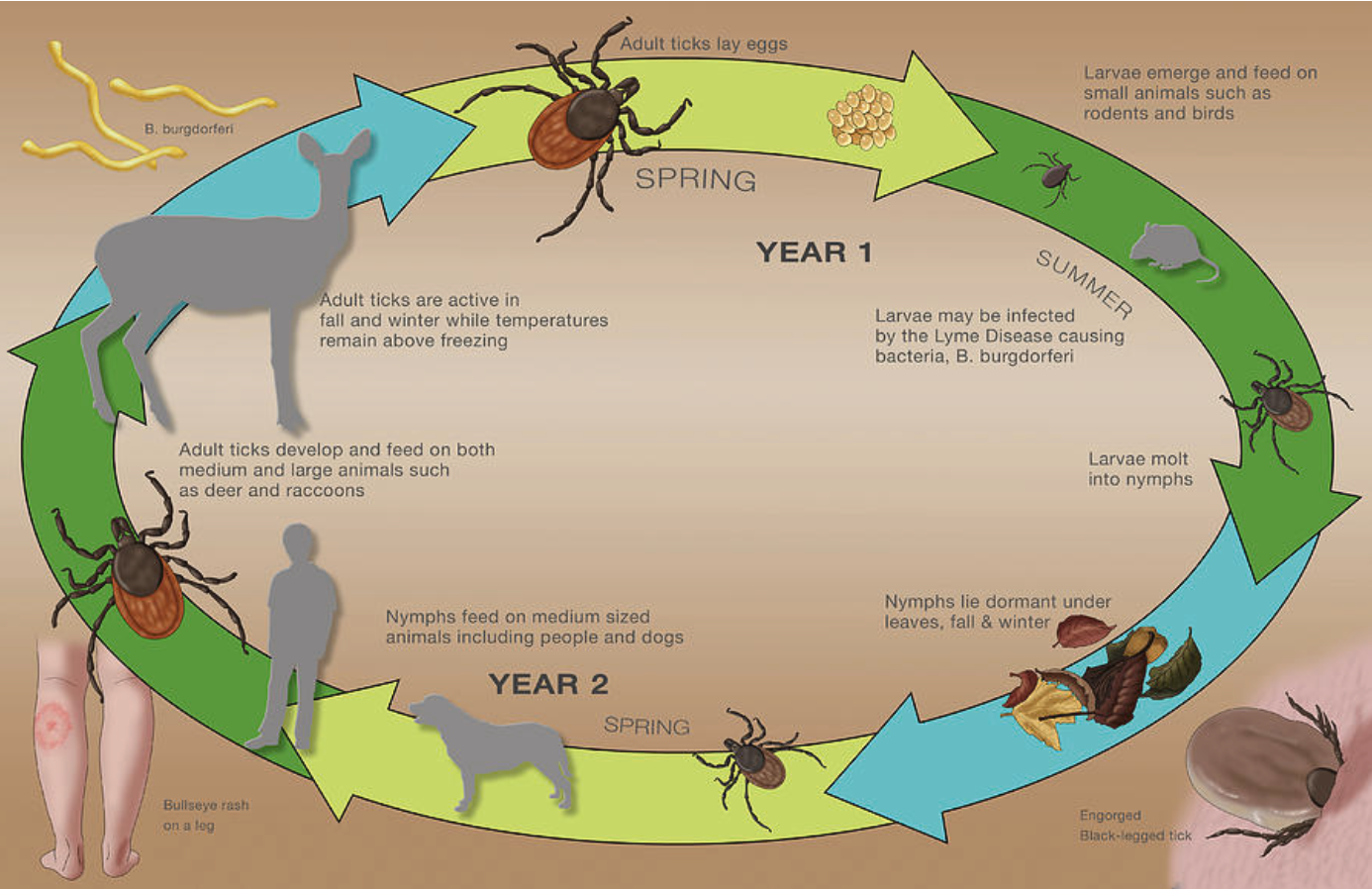
Spring Year #1 - Thousands of eggs are laid
Summer/Year #1 - larvae emerge from eggs and feed on host #1 - rodents and birds
Fall Year #1 - Larvae leave host & morph to nymphs
Winter Year #1 - Nymphs lay dormant under leaves
Spring and Summer Year #2 - Nymphs wake up and quest for blood meal #2 on humans/dogs/turkeys/rabbits -- medium sized animals
Summer and fall Year #2 - After 2nd blood meal, Nymphs morph to adults
Winter Year #2 - adults lay dormant, overwinter
Spring Year #2 - female adults seek/find host. While feeding they mate with male. Then they fall off the host, and lay eggs. Everybody dies except the eggs.
End/start of story.
For more cool charts and awesome pictures, visit the University of Maine’s Cooperative Extension’s website.