
Alpha Gal Syndrome by the Numbers
In the United States, the lone star tick is most often associated with alpha-gal syndrome (AGS). A few cases of AGS have been reported following bites from deer (black legged) ticks and western black legged ticks. With the recent invasion of the lone star tick, the Vineyard population has suffered a sharp increase in cases of AGS. In other countries, other tick species have been linked to AGS.
According to the CDC ,110,000 suspected cases of AGS were identified between 2010 and 2022. The actual number of AGS cases in the United States is not known, but as many as 450,000 people may now (2026) be affected.
In a 2024 publication examining 3,000 U.S. military recruits, researchers found alpha-gal IgE sensitization rates of 39% in Arkansas, 35% in Oklahoma and 29% in Missouri — far above the cohort-wide prevalence of 6%. The geographic distribution of sensitization closely mirrored the known range of the lone star tick, further supporting the link between tick exposure and alpha-gal sensitization.
According to Eleanor F. Saunders, MD, MPH, assistant professor of medicine at U. North Carolina, “We know from research that over 31 million people in the United States are estimated to be bitten by a tick each year. This high rate of tick exposure helps contextualize how seroprevalence of alpha-gal IgE could be so high in some areas.”
With a national population estimated in 2026, to be 350 million, this means approximately 10% of the population is bitten each year. Not surprisingly, rural and suburban populations are much more likely to be bitten and to have elevated IgE alpha gal.
On Martha’s Vineyard in 2025, from June 1 to July 5, 261 tick-related E.D. visits for tick-related illnesses were recorded. The same period in 2024 saw 194 tick-related visits. Test results for AGS by year are tabulated below.
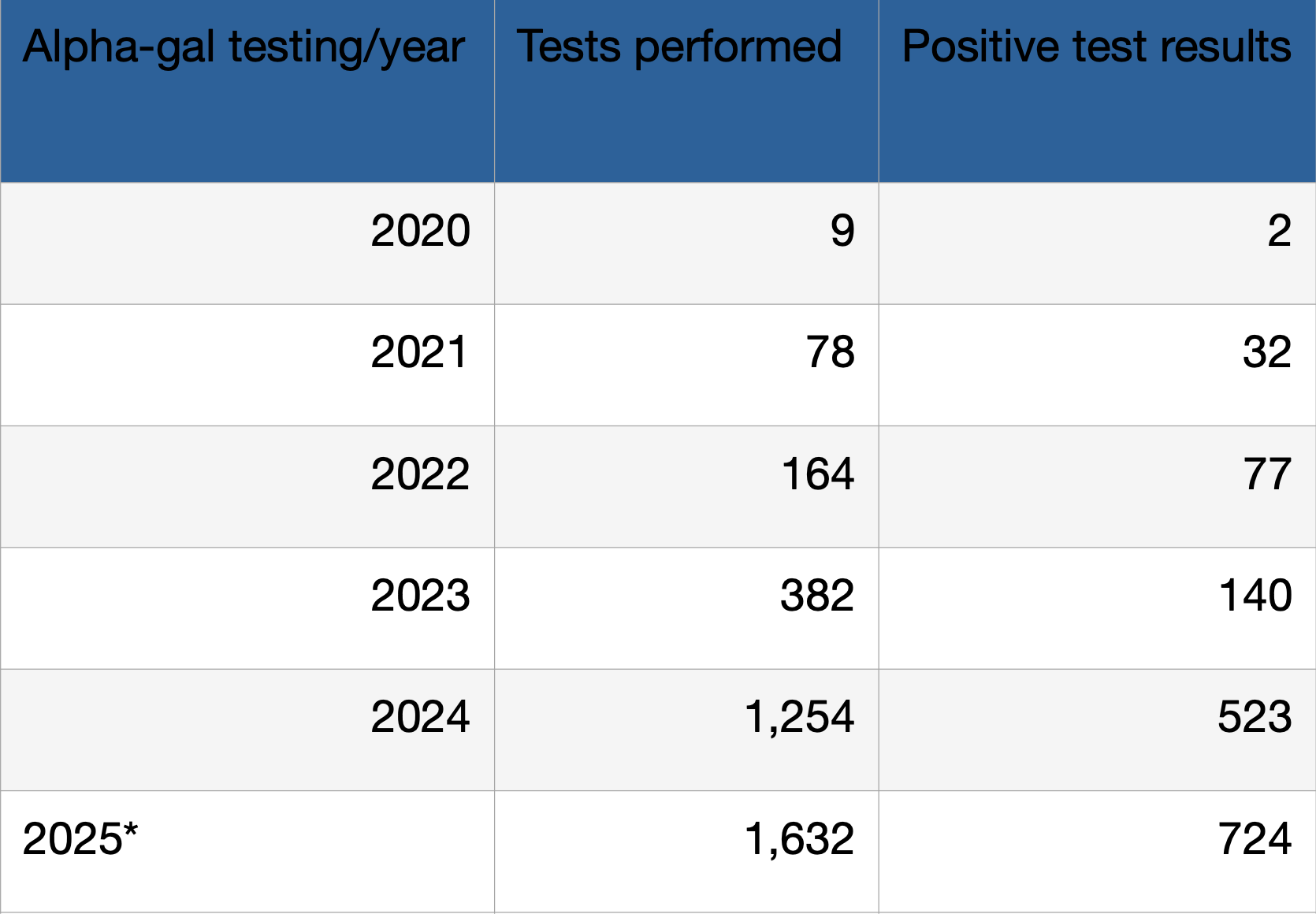
As our MVM team knows well, last year 20% of the visits to our clinic were tick-related. Now that we have started the Tick Center at a time when alpha-gal seems to be surging in prevalence, it will be interesting to review the the numbers by mid-summer next year.
What is clear is that alpha-gal is not going away anytime soon; nor are the other tick-borne diseases.
Lea Hamner and her associates have compiled the figures
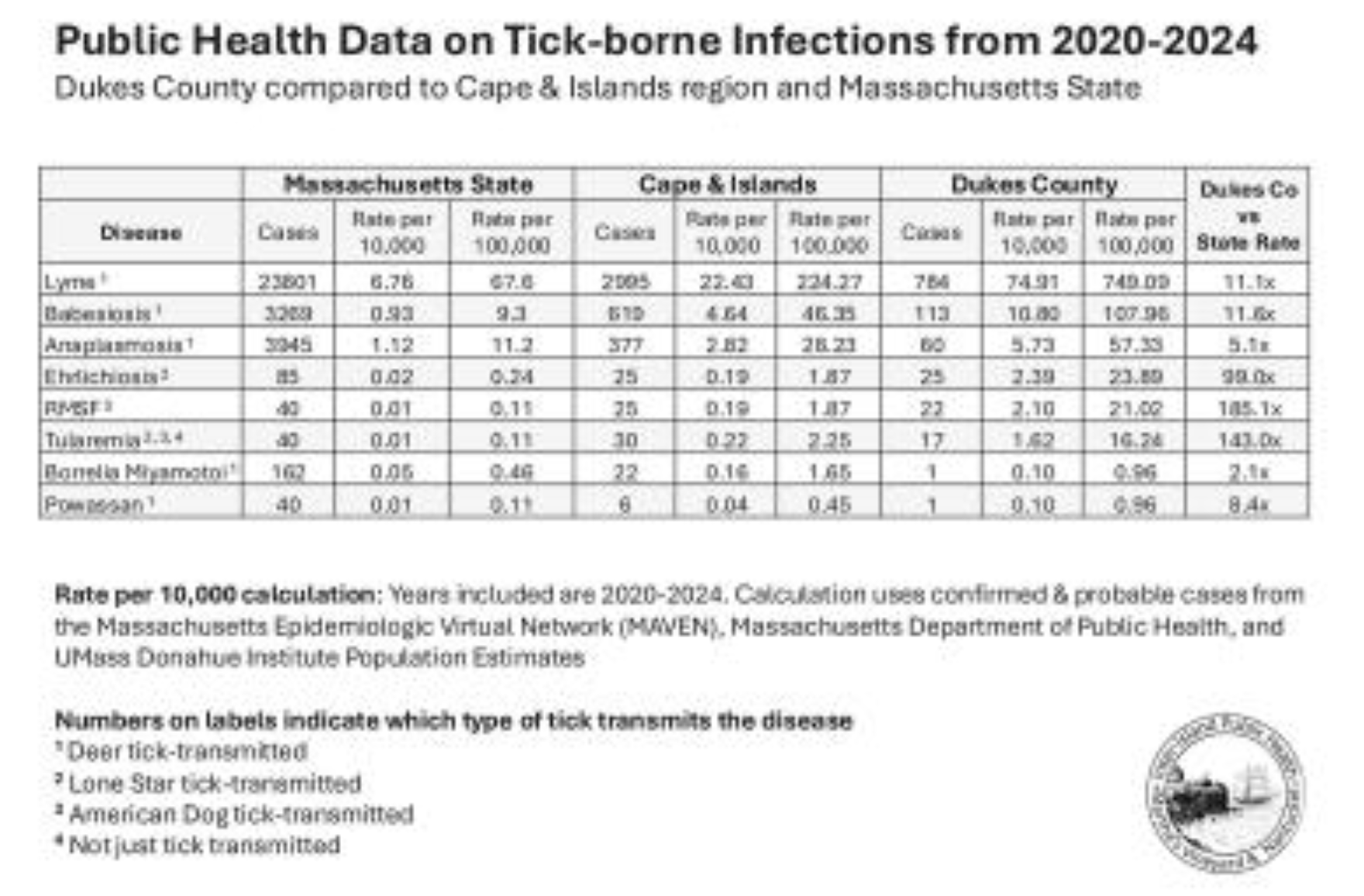
Lea Hamner/Martha’s Vineyard Tick Program, and the Inter-Island Public Health Excellence Collaborative
If this week’s Tick Tidbit seems a little dry and too numerical, here’s a diversionary snippet of rank doggerel to put all of this in a big evolutionary picture perspective.
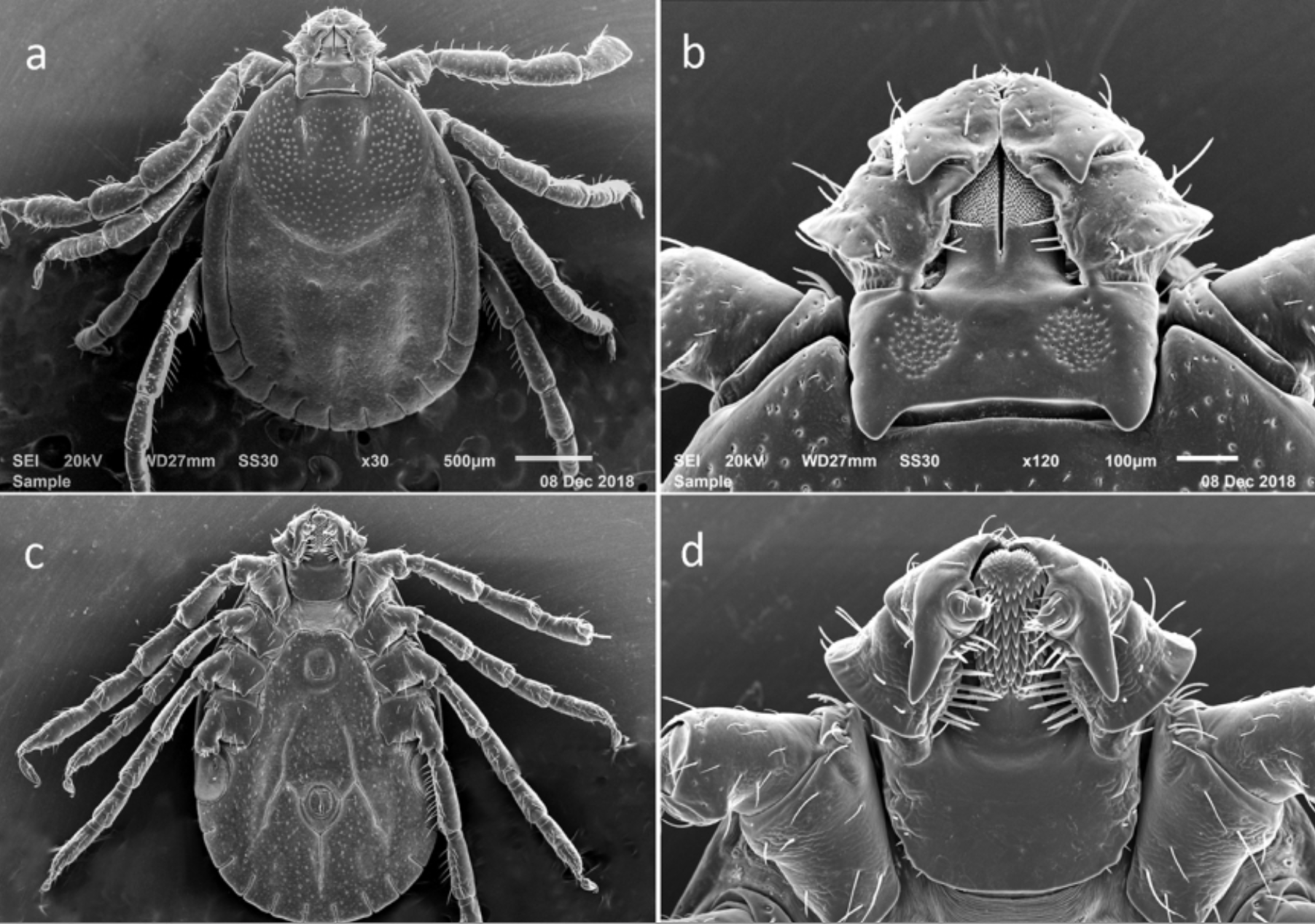
Brief Doggerel for the Tick
Behold the tiny tick! Well, lah-dee-dah
This arachnoid is of the order Ixodida
And has sucked blood now for 100 million years.
Grandaddy Tick and his ugly Cretaceous Era peers
Latched onto the hides of giant dinosaurs
(FYI - T. Rex’s skin was much thicker than ours)
And drank their fill, till their bellies almost popped.
And that, it seems, is where tick development stopped.
They needed no further evolutionary adaption
Voila! Nature’s state-of-the-art
blood sucking contraption
Has been doing just that over time, and without emotion
Has sucked enough blood to fill dozens of oceans.
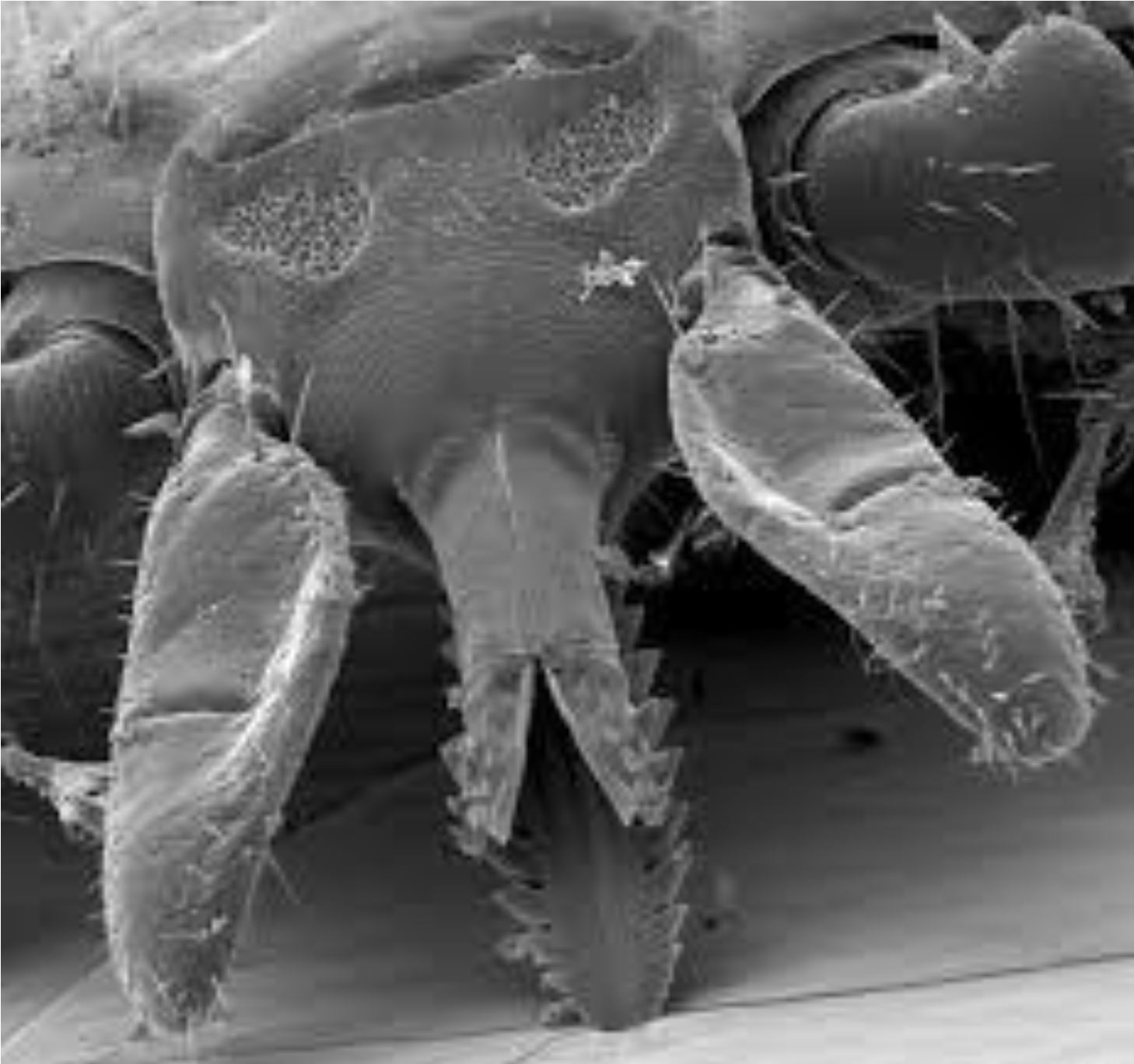
Just look up close! Nothing needs to be said -
This primitive little monster has no head!
Just a mouth and a tummy, and legs
to help him travel
Up the leg of a reptile or a bird or a mammal.
Then he chomps down hard and digs in
with barbed teeth
To suck up all the delicious red juice beneath.
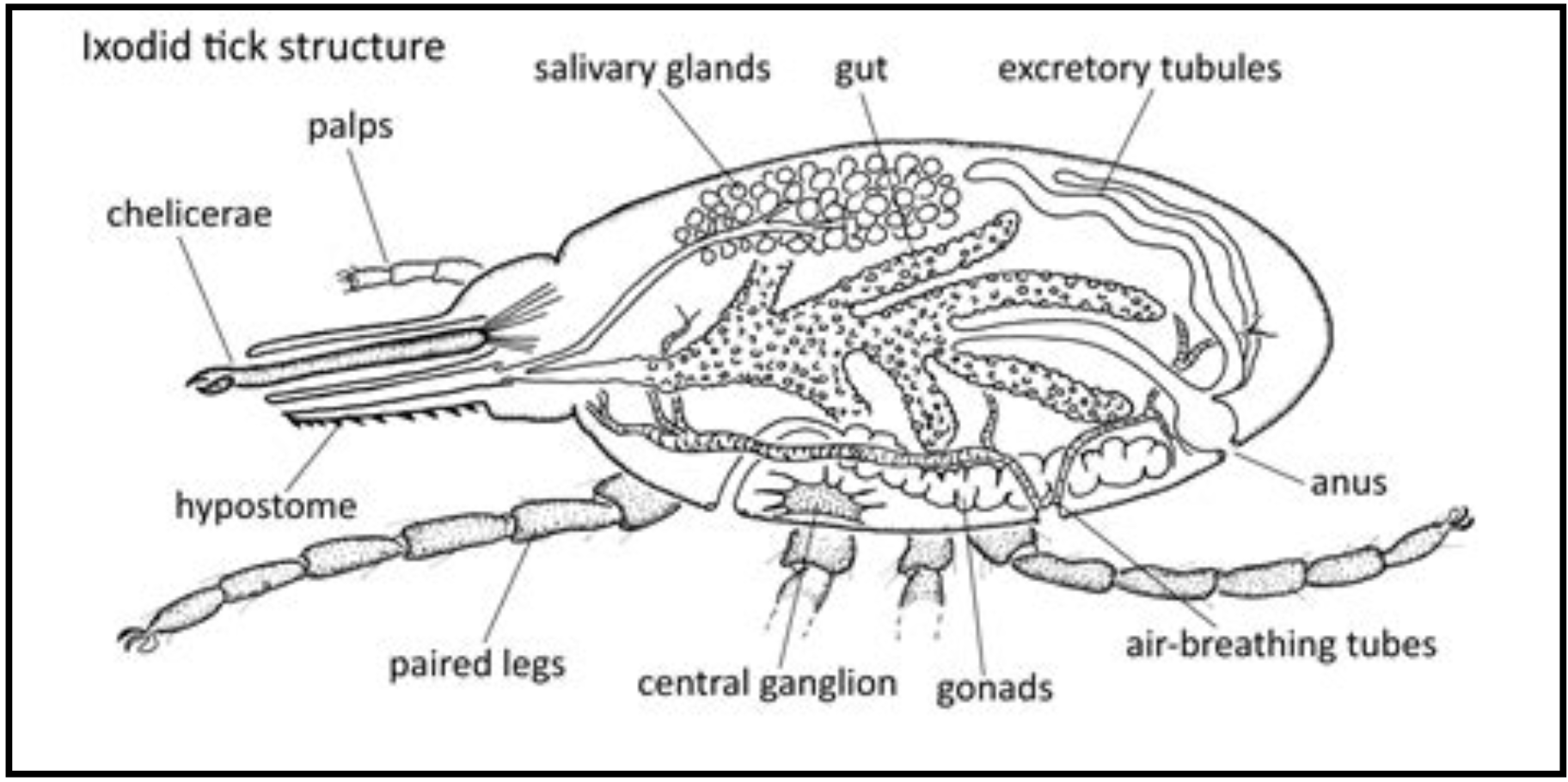
A tick has other organs as the above diagram contends,
But they are mere accessories to his formidable oral
business end
Which has functioned since the start of time,
but pardon, if I philosophize:
If only ticks would
pick on creatures their own size!!!!