
New Jaws on The Block
The focus of this week’s Tick Tidbit is tick jaws - their mechanism of attaching and sticking to the host’s hide or skin - and what their saliva contains.
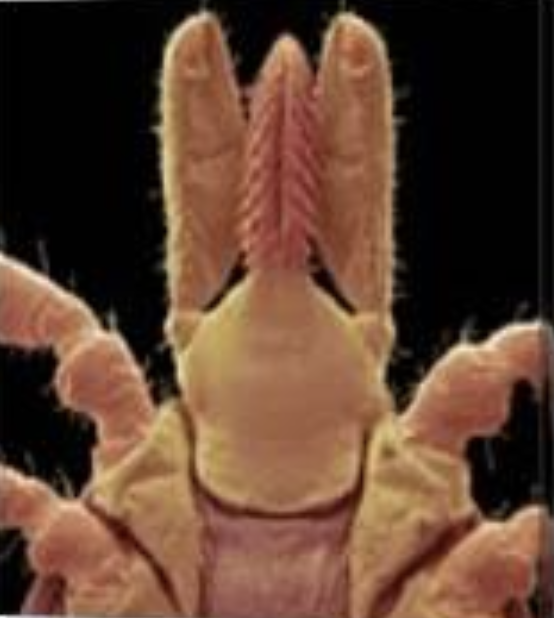
A tick’s mouth has 3 main sections: the hypostome and a pair of chelicerae. The hypostome is a needle-like, barbed structure positioned in between the two chelicerae. The underside of the hypostome has backwards-facing teeth that hook into the host. On either side of the hypostome, the two chelicerae act as retractable rods with hooks on the end of each. When a tick is ready to feed, it will use the chelicerae to puncture and dig into the skin. As flesh is pulled out of the way, the tick will push the hypostome into the host until it is fully embedded, using the hooks at the end of the chelicerae to further secure itself.
Once the mouthparts are fully embedded, the tick injects its saliva into the host through a groove running down the center of the hypostome.
Chemicals in the saliva numb the area so hosts won’t notice that they are being bitten. There are also blood thinners in the saliva. This causes blood to pool under the surface of our skin at the bite site.
Saliva from infected ticks can also transmit disease-causing pathogens into the host, leading to serious complications such as Lyme disease.
Certain species will also discharge a cement-like substance to help them stay attached. The tick will then suck the pooled blood through the groove on their hypostome, finally detaching once fully fed.
The saliva of certain species of ticks can also inject a neurotoxin, which can cause tick paralysis - a rare but potentially fatal disease, cured by finding and removing the tick. Though tick paralysis is seen more frequently in western states, 75 of the known 900 species of ticks can secret the neurotoxin. The Lone Star tick, the deer tick and the wood tick can also cause tick paralysis. Children and small animals are more vulnerable, due to smaller body mass.
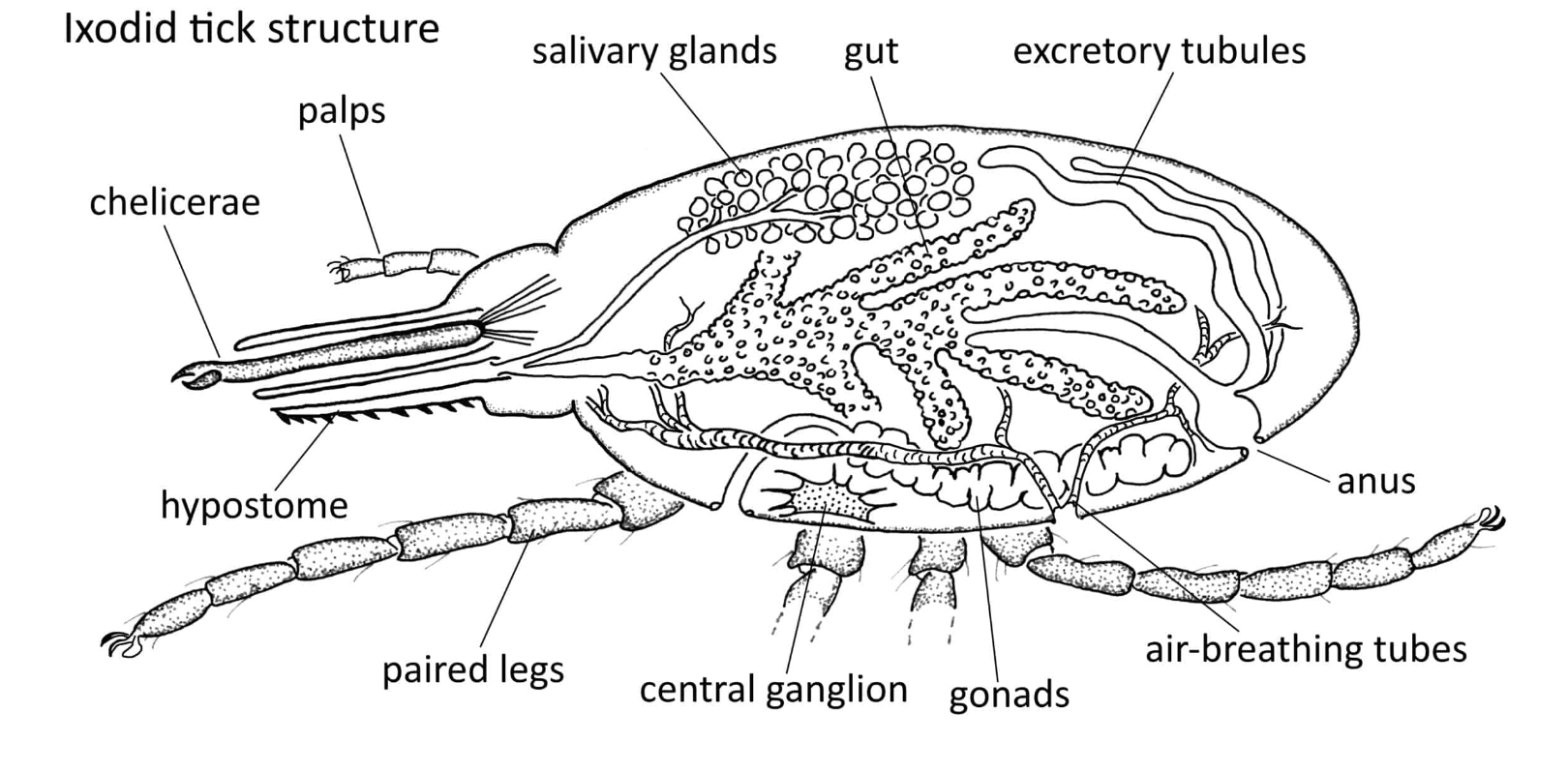
What else is contained in tick saliva? Alpha gal is included in the saliva of Lone Star ticks. And if a tick has consumed a pathogen from its former host, the organism can be absorbed through the passed on to the gut and then transferred to the salivary glands to be passed on to the next host.
In summary: the two major portions of the tick’s Jaws are the hypostome and chelicerae, and
the components of the saliva include: anesthetic, anticoagulant, chemical glue or cement, possible neurotoxins, alpha gal allergen, and pathogens that cause Lyme disease, Ehrlichiosis, Babesiosis, Rocky Mountain Spotted Fever, Tularemia, and many viruses, specifically in our area Powassan.
________________________
Here are link to further useful information.
LifeMD
https://lifemd.com › learn › 8-common-tick-borne-diseases
8 Common Tick-Borne Diseases | LifeMD
Mayo Clinic
https://www.mayoclinic.org › diseases-conditions › alpha-
gal-syndrome › in-depth › tick-species › art-20546861
YaleNews
https://news.yale.edu › 2026 › 04 › 22 › ticks-spread-so-do-diseases-they-carr