
Life Cycle of Lone Star Ticks
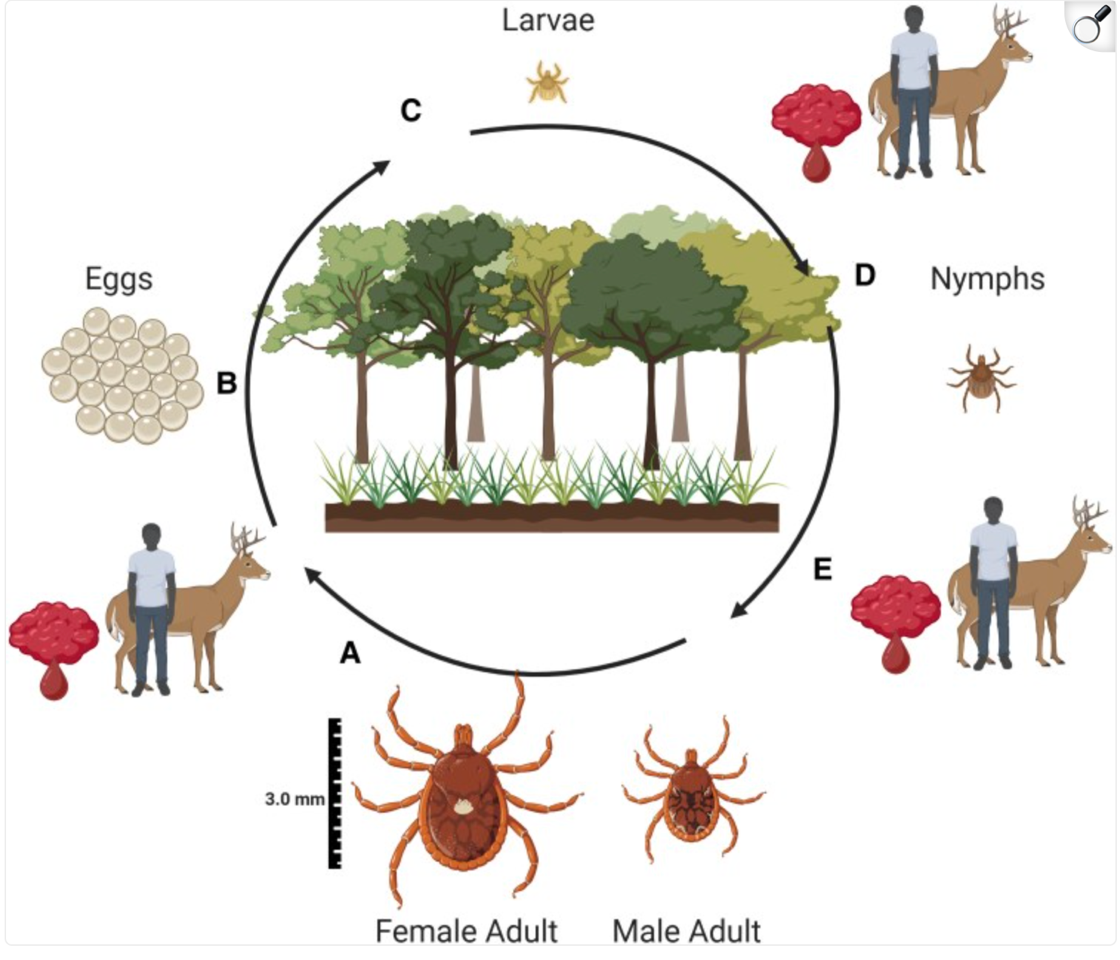
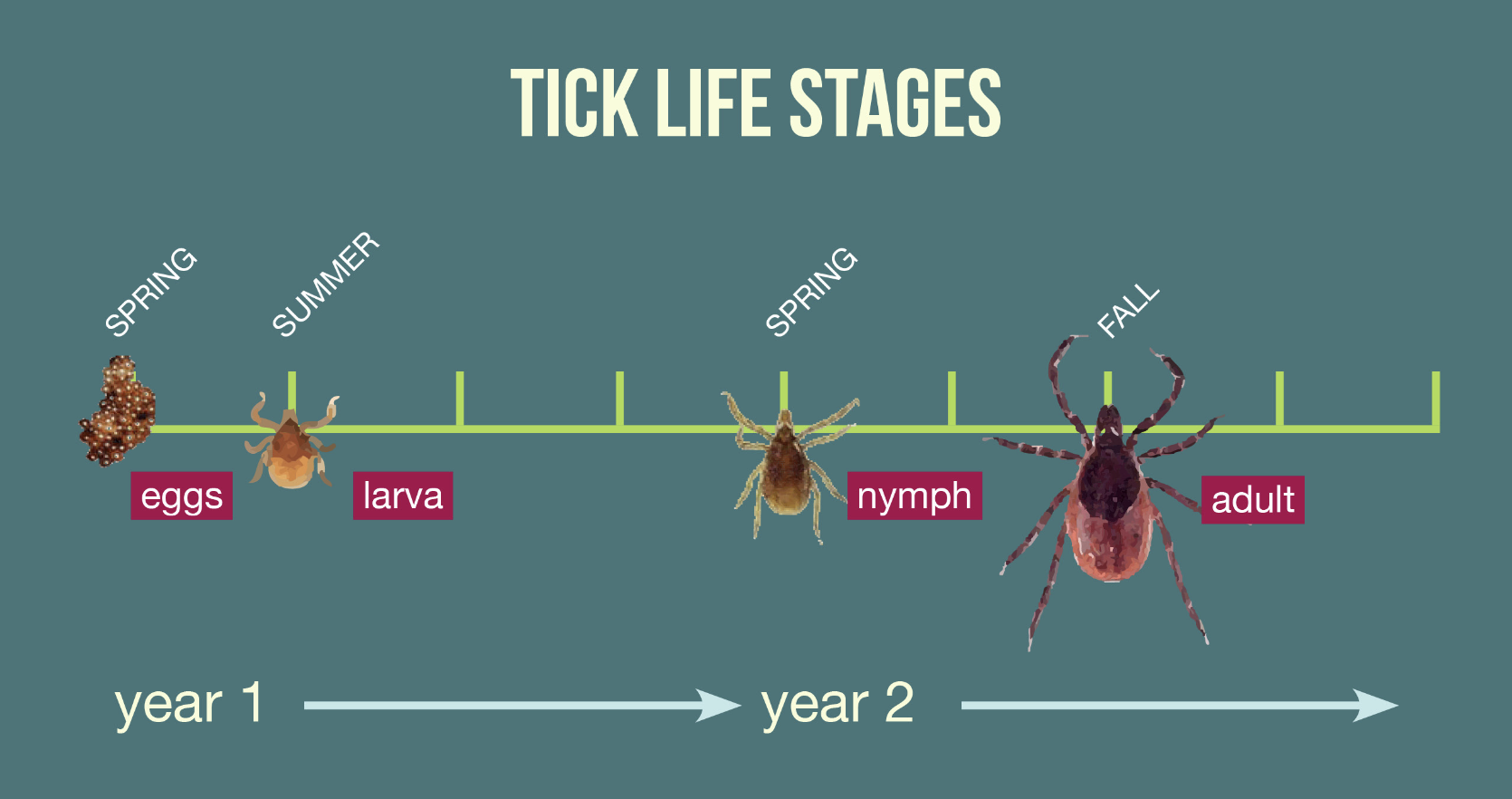
The life cycle of the lone star tick (Amblyomma americanum) consists of four distinct stages: egg, larva, nymph, and adult. This cycle (E-L-N-A) typically spans about two years and involves 3 hosts.
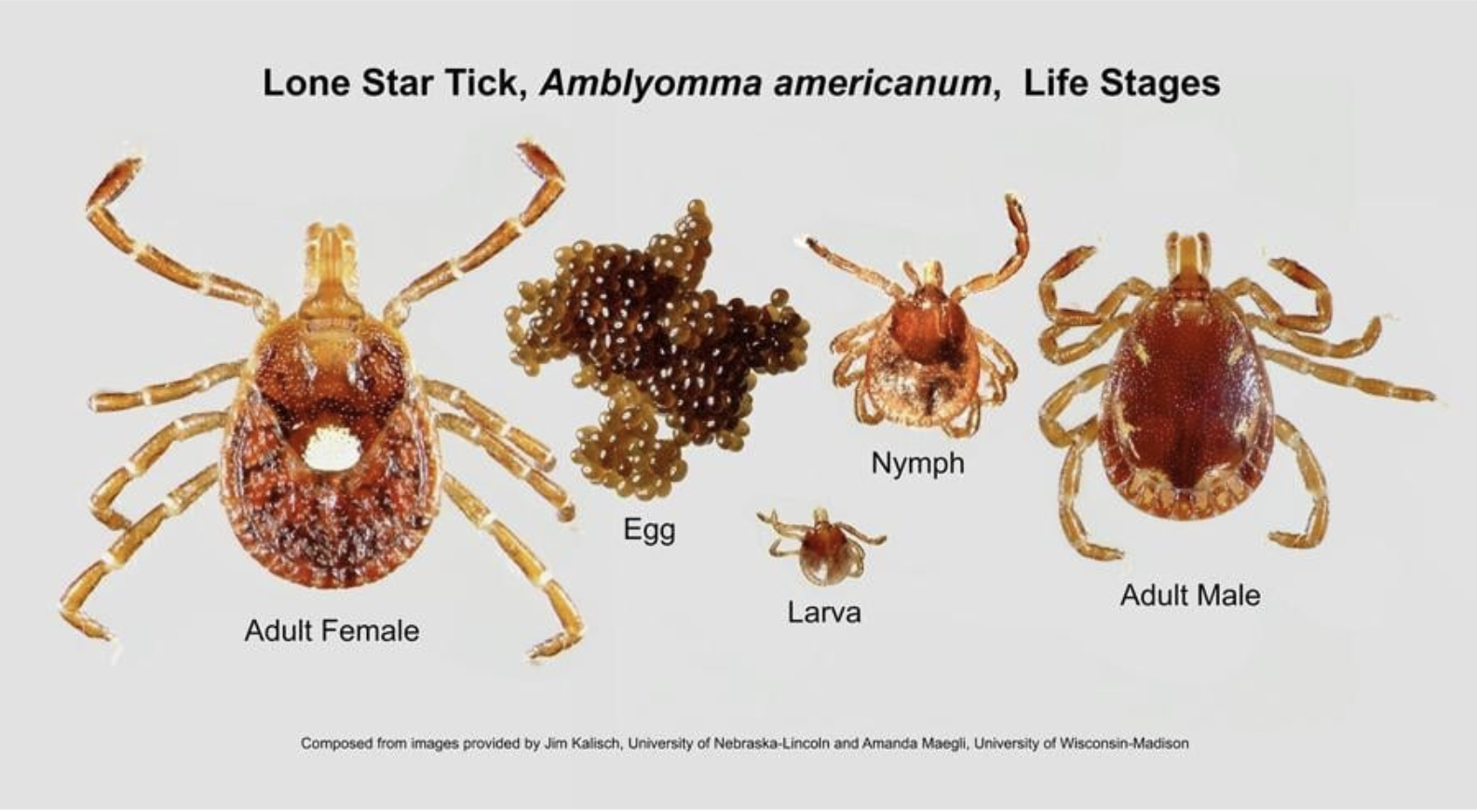
Feeding Behavior
Larvae: Feed on small rodents for 3 to 7 days before detaching to molt into nymphs.
Nymphs: Attach to larger mammals, feed, and may overwinter before becoming adults.
Adults: Seek larger hosts, including humans, and require a blood meal to reproduce.
Each stage requires a different host for feeding, making the lone star tick a "three-host tick." This unique feeding behavior is essential for their development and reproduction.
Both larvae and nymphs can survive up to 6 months without feeding on a host, and adults can survive up to two years without feeding, if the environmental conditions are optimal. Unlike mosquitoes, biting midges, fleas, and most other blood-feeding arthropods, which can obtain a blood meal within a few minutes, ticks usually feed for several days or even weeks, during which time they significantly increase in size to accommodate the blood consumed.
REVIEW: TICK PICS
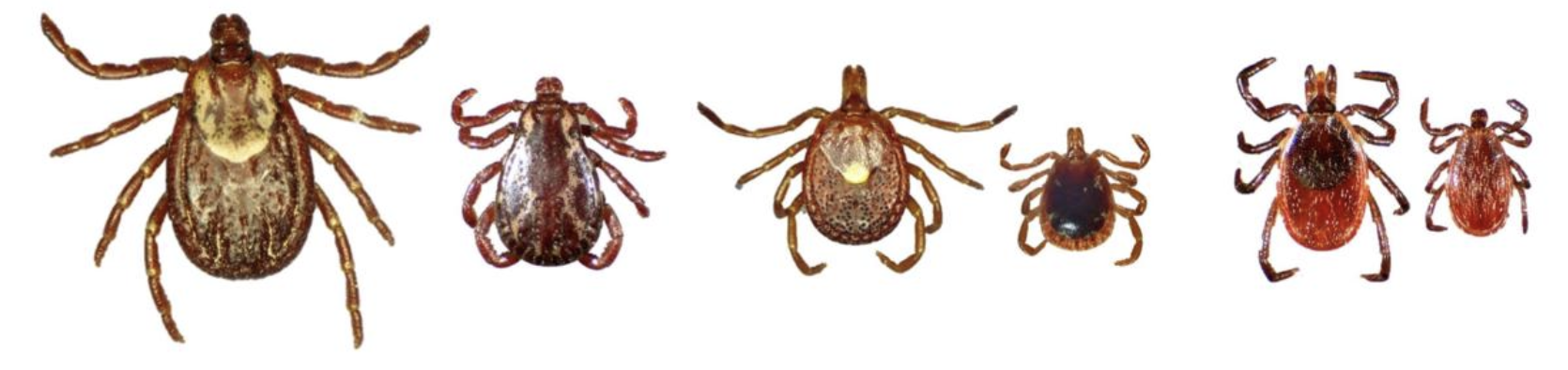
Three most common species of ticks found on Martha’s Vineyard that bite humans and animals (from left to right): Female American dog/wood tick, male American dog/wood tick, female lone star tick, male lone star tick, female blacklegged (deer) tick, male blacklegged (deer) tick.