
Neurological Effects of Lyme Disease
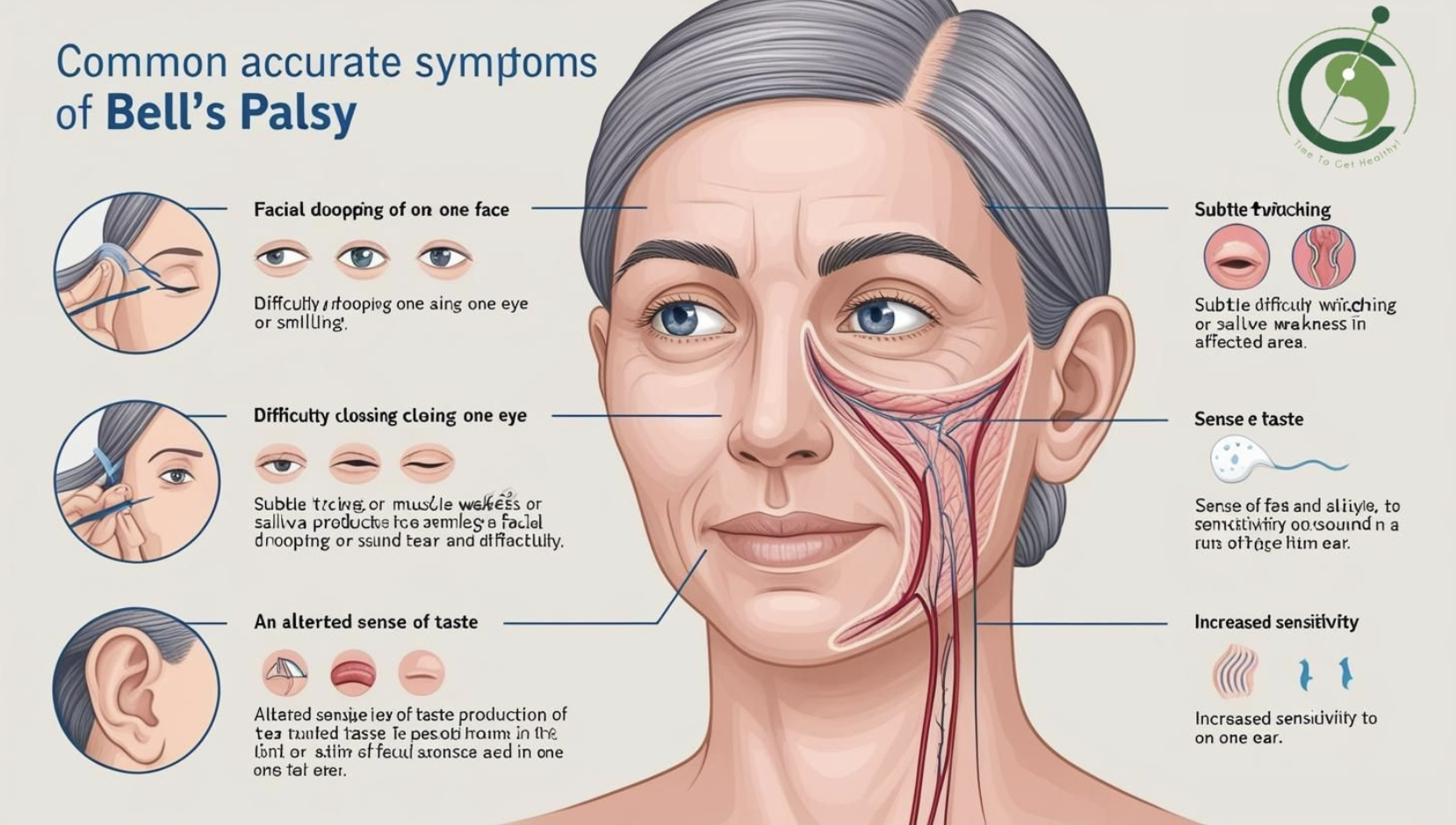
Neurologic symptoms of Lyme disease occur when the Lyme disease bacteria affect the peripheral or central nervous systems. Cranial nerve involvement: When the cranial nerves are affected, facial palsy (droop) can occur on one or both sides of the face.
Peripheral nerve involvement: When the peripheral nerves are affected, patients can develop radiculoneuropathy which can cause numbness, tingling, "shooting" pain, or weakness in the arms or legs.
Central nervous system involvement: When the central nervous system is affected, Lyme meningitis can cause fever, headache, sensitivity to light, and stiff neck.
Out of every 100 patients whose cases are reported to CDC, 9 have facial palsy, 4 have radiculopathy, and 3 have meningitis or encephalitis. Because of reporting practices, this statistic may overestimate how often these manifestations are seen by clinicians.
Other Causes of Bell’s Palsy
Reactivation of herpes simplex virus, particularly HSV-1, is considered the likely cause of many Bell’s palsy cases, although the evidence is not conclusive and routine clinical testing cannot usually confirm it. Bell’s palsy therefore remains a diagnosis of idiopathic isolated peripheral facial paralysis.
Varicella-zoster virus can also cause peripheral facial paralysis. When accompanied by ear pain and vesicles in the ear canal, it is classified as Ramsay Hunt syndrome rather than Bell’s palsy; occasionally, zoster occurs without a rash and can resemble Bell’s palsy.
Treatment Strategy of Bell’s Palsy
For confirmed Lyme-associated facial nerve palsy, corticosteroids should not routinely be added to appropriate antimicrobial treatment. Retrospective studies show no benefit, and some reports suggest worse facial-nerve outcomes.
Important distinctions re: corticosteroids
(From Uptodate) If Lyme disease is only being considered and idiopathic Bell’s palsy remains possible, corticosteroids should not be delayed while awaiting Lyme testing because their benefit in idiopathic Bell’s palsy is time- sensitive.
If corticosteroids were already started before Lyme disease was confirmed, evidence does not clearly establish whether to continue or stop them; UpToDate’s neurologic Lyme guidance considers either practice reasonable. Thus, for established Lyme facial palsy: treat the Lyme disease, but do not newly initiate adjunctive corticosteroids.
MENINGITIS
Lymphocytic/monocytic meningitis, alone or in combination with cranial nerve or spinal nerve root involvement, represents the most common form of nervous system involvement. Meningitis usually occurs several weeks to a few months after the tick bite and may be the first manifestation of Lyme disease. It is unusual for meningitis to begin many months or years after the initial infection.
Clinical manifestations — Symptomatic lymphocytic/ monocytic meningitis of Lyme disease is largely indistinguishable from viral meningitis, with headache, fever, photosensitivity, and neck stiffness. Studies in children suggest that it has a slightly more indolent onset than viral meningitis, with a few more days elapsing between the first symptom and clinical presentation.
Among Lyme disease cases verified by the United States Centers for Disease Control and Prevention (CDC), approximately 2 percent have meningitis in isolation. Headache and mild neck stiffness are not reliable predictors of meningitis in a patient with Lyme disease. In a European study of 161 adults with erythema migrans and suspected central nervous system (CNS) involvement, a cerebrospinal fluid (CSF) pleocytosis was present in only 31 (19 percent) [8]. CSF pleocytosis was more likely in patients who also had radicular pain, meningeal signs, and larger or multiple erythema migrans skin lesions. By contrast, headache, neck pain, fatigue, and memory or concentration problems did not predict a CSF pleocytosis or other abnormalities.
Evaluation — CSF and serum testing are essential in the evaluation of any patient with suspected acute meningitis.
Neuroimaging is needed if there is a clinical suspicion of raised intracranial pressure (particularly papilledema) or parenchymal brain involvement with focal neurologic signs or changes in mental status. Serologic testing — Patients with suspected Lyme disease should undergo serologic testing for antibodies to B. burgdorferi. Except for unusual patients who present with neurologic manifestations within four to six weeks of infection, serologic testing is highly sensitive and specific for the diagnosis of Lyme disease.
The two-tier strategy, which is recommended by the CDC, typically uses a sensitive enzyme-linked immunosorbent assay (ELISA) followed by a Western blot or a second ELISAwith different targets.
If the initial ELISA is positive or equivocal, then the same serum sample should be tested by Western blot or by a second, orthogonal ELISA; the latter approach has been shown to be as valid as using a Western blot, is easier to perform on large numbers of samples, and is easier to standardize. If the initial ELISA is negative, the sample needs no further testing.
Treatment of Lyme CNS Meningitis
(Up-to-Date recomendations)
For an adult who is not pregnant or breastfeeding, oral doxycycline is preferred for most patients with confirmed Lyme meningitis; treatment duration is 14 to 21 days. Patients requiring hospitalization: IV treatment is reasonable, with transition to oral doxycycline generally possible at discharge. A typical regimen is ceftriaxone 2 g IV once daily for 14 to 21 days. If doxycycline cannot be used: IV ceftriaxone is generally preferred. Another IV option is cefotaxime 2 g IV every 8 hours for 14 to 21 days. Cefotaxime has limited availability in the United States.
A repeat lumbar puncture is generally unnecessary. Neurologic recovery may be delayed, and persistent findings such as facial palsy do not necessarily indicate treatment failure. If treatment efficacy remains in question, a decline in CSF pleocytosis can be informative; serologic antibodies decline slowly and do not determine clearance or treatment success. Guillain-Barré Polyradiculoneuritis, though not frequent, can be the result of neuroborelliosis and should be susceptible to oral or intravenous antibiotics.