
Liquid permethrin is a synthetic insecticide derived from chrysanthemum compounds that kills or repels insects by disrupting their nervous system, leading to paralysis and death.
It is highly effective against a wide range of pests, including mosquitoes, ticks, fleas, ants, chiggers, flies, and midges, many of which can transmit disease.
Permethrin works best on clothing and gear, not skin, as it binds to fabric fibers and provides long-lasting, odorless, and invisible protection. Insect contact with treated surfaces can result in rapid knockdown or detachment, especially for smaller insects like ticks and biting flies.
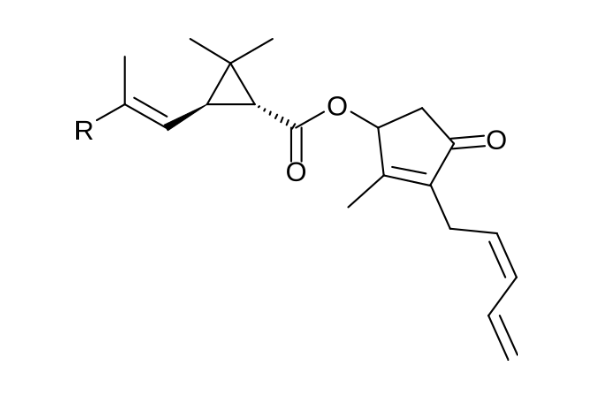
Chemical structure of pyrethrins: pyrethrin I (R=CH3), pyrethrin II (R=CO2CH3)
History of this Fab Flower’s Power
The pyrethrins occur in the seed cases of the perennial plant pyrethrum (Tanacetum cinerariifolium), which has long been grown commercially to supply the insecticide.
In the 1880s, pyrethrum cultivation began in Japan when Ueyama grew the flowers in Wakayama and promoted their use across the country, primarily for lice control. Inspired by this, his wife Yuki conceptualized the mosquito coil, which became an effective and globally used tool against mosquitoes.
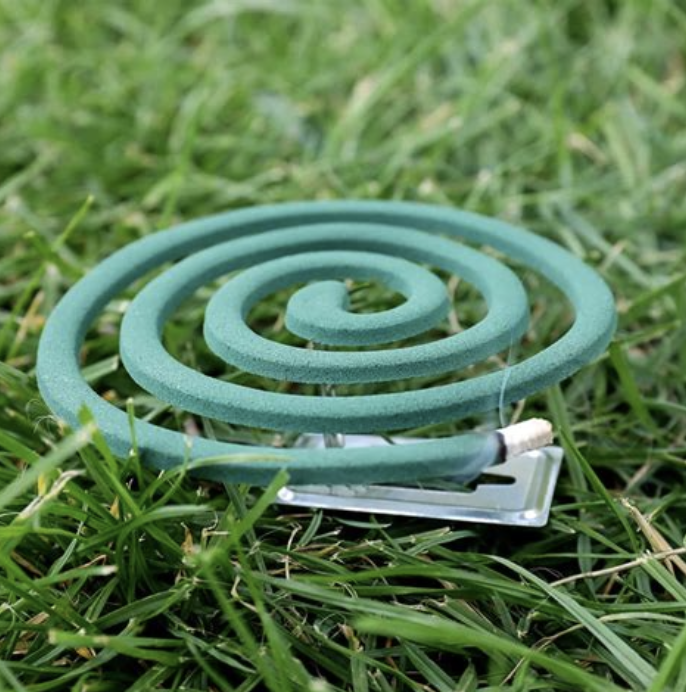
(A mosquito coil is a mosquito-repelling incense, usually made into a spiral, and typically made using dried paste of pyrethrum powder. The coil is usually held at the center of the spiral, suspending it in the air, or wedged by two pieces of fireproof netting to allow continuous smoldering. Burning usually begins at the outer end of the spiral and progresses slowly toward the center of the spiral, producing a mosquito-repellent smoke. A typical mosquito coil measures around 15 centimeters in diameter and lasts around seven to twelve hours.)
Mosquito Coil
Scientific interest followed, with biologist Fujitani publishing the first study on pyrethrum's insecticidal properties in 1909, sparking international chemical research. In 1923, Yamamoto identified that the active compounds in pyrethrum contained a cyclopropane ring, building on interest from Umetaro Suzuki. Later,
Staudinger and Ruzicka analyzed the compounds in depth, and in 1944, LaForge and Barthel finally confirmed the full structures of pyrethrins. [Wikipedia]
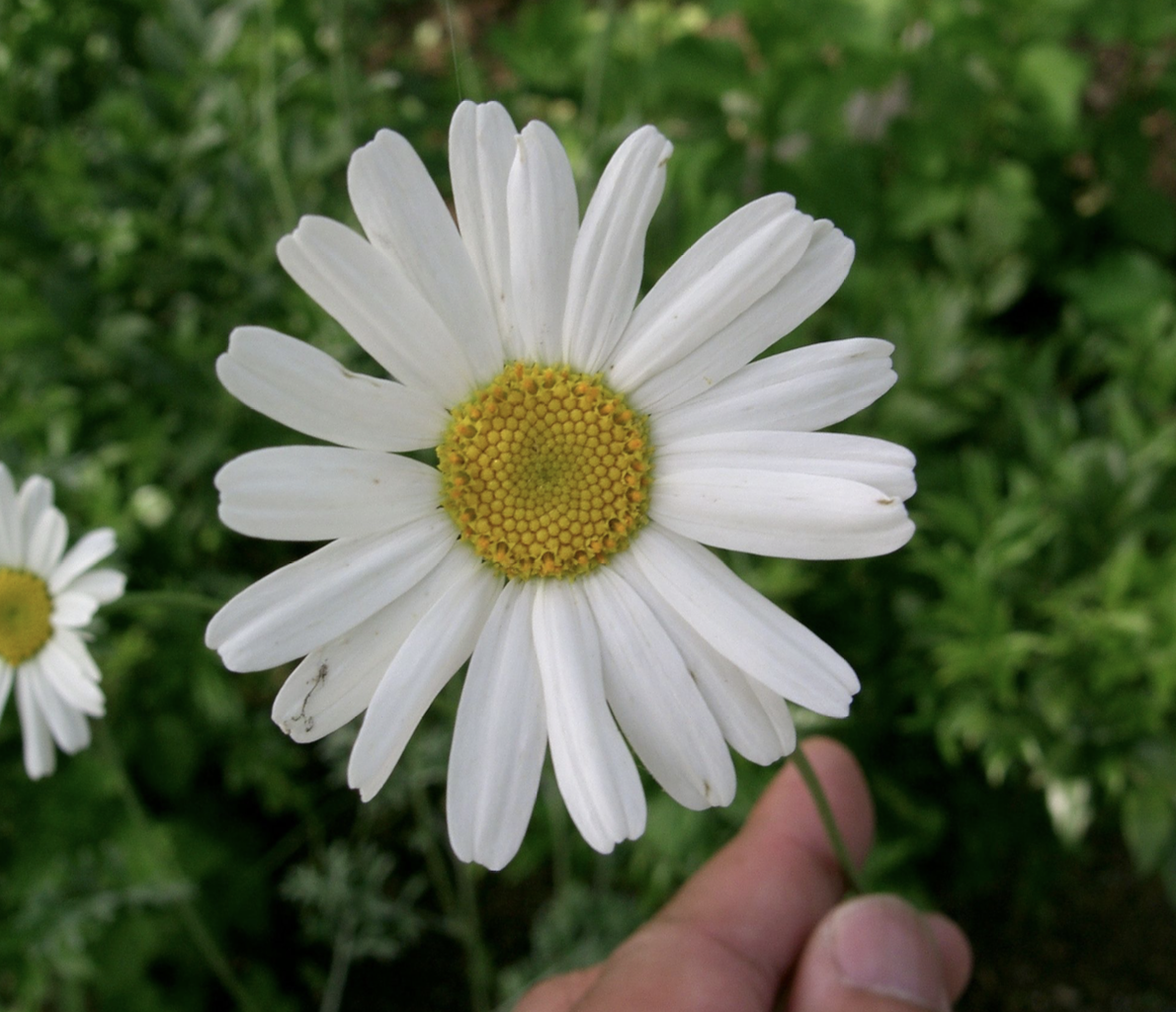
Tanacetum cinerariifolium
(the Dalmatian chrysanthemum)
Commercial pyrethrin production mainly takes place in mountainous equatorial zones. The commercial cultivation of the Dalmatian chrysanthemum takes place at an altitude of 1600 to 3000 meters above sea level. This is done because pyrethrin concentration has been shown to increase as elevation increases to this level.

Painted Daisy
Pyrethrum extracted of the Persian chrysanthemum (painted daisy) was already imported to central Europe from Georgia in the middle of the 19th century. Most of the world's supply of pyrethrin today comes from Kenya, which produces the most potent flowers. Other countries include Croatia (in Dalmatia) and Japan. The flower was first introduced into Kenya and the highlands of Eastern Africa during the late 1920s. Since the 2000s, Kenya has produced about 70% of the world's supply of pyrethrum.
A substantial amount of the flowers are cultivated by small-scale farmers who depend on it as a source of income. It is a major source of export income for Kenya and source of over 3,500 additional jobs. About 23,000 tons were harvested in 1975. The active ingredients are extracted with organic solvents to give a concentrate containing the six types of pyrethrins. [Again Wikipedia]
Toxic Action of Permethrin on Ticks
Permethrin affects insects by disrupting the normal function of sodium channels in their nerve cells. These channels control the flow of sodium ions, which are essential for transmitting nerve impulses. By keeping the sodium channels open, permethrin causes the nerve cells to fire continuously, leading to muscle spasms, paralysis, and ultimately death
Significant Reduction in Bites: Studies have shown that wearing permethrin-treated clothing can lead to a substantial decrease in tick bites, with some studies reporting up to a 65% reduction in tick encounters among outdoor workers.
Safety Considerations
Low Toxicity to Humans: While permethrin is highly effective against ticks, it is of low toxicity to humans. and some pets, as they metabolize it quickly.
But Permethrin is highly toxic to aquatic life, particularly fish, and should be used with caution to avoid environmental contamination.
Permethrin's effectiveness and safety profile make it a valuable tool in tick prevention strategies, especially when combined with other protective measure.

However, Permethrin is highly toxic to cats and can cause serious illness or death if they are exposed to it, often through accidental application of dog flea products or contact with treated dogs. Symptoms of poisoning include twitching, drooling, and seizures, and immediate veterinary care is essential if exposure is suspected. The cat liver cannot process permethrin, therefore be careful using it around cats!!!
One last word about Permethrin’s Effects
Dr. Lee Haines, a medical entomologist at the University of Notre Dame, says in tickfreeoutdoors.com. “If you see a mosquito that touches permethrin, it’s shaking uncontrollably, it’s flying uncontrollably, like it just had a lot of sugar. It’s buzzing around, and that’sbecause all of its nerves are firing at once.” That causes muscle spasms; once the insect’s muscles are exhausted it becomes paralyzed and then dies.