
But first a brief review of tick anatomy
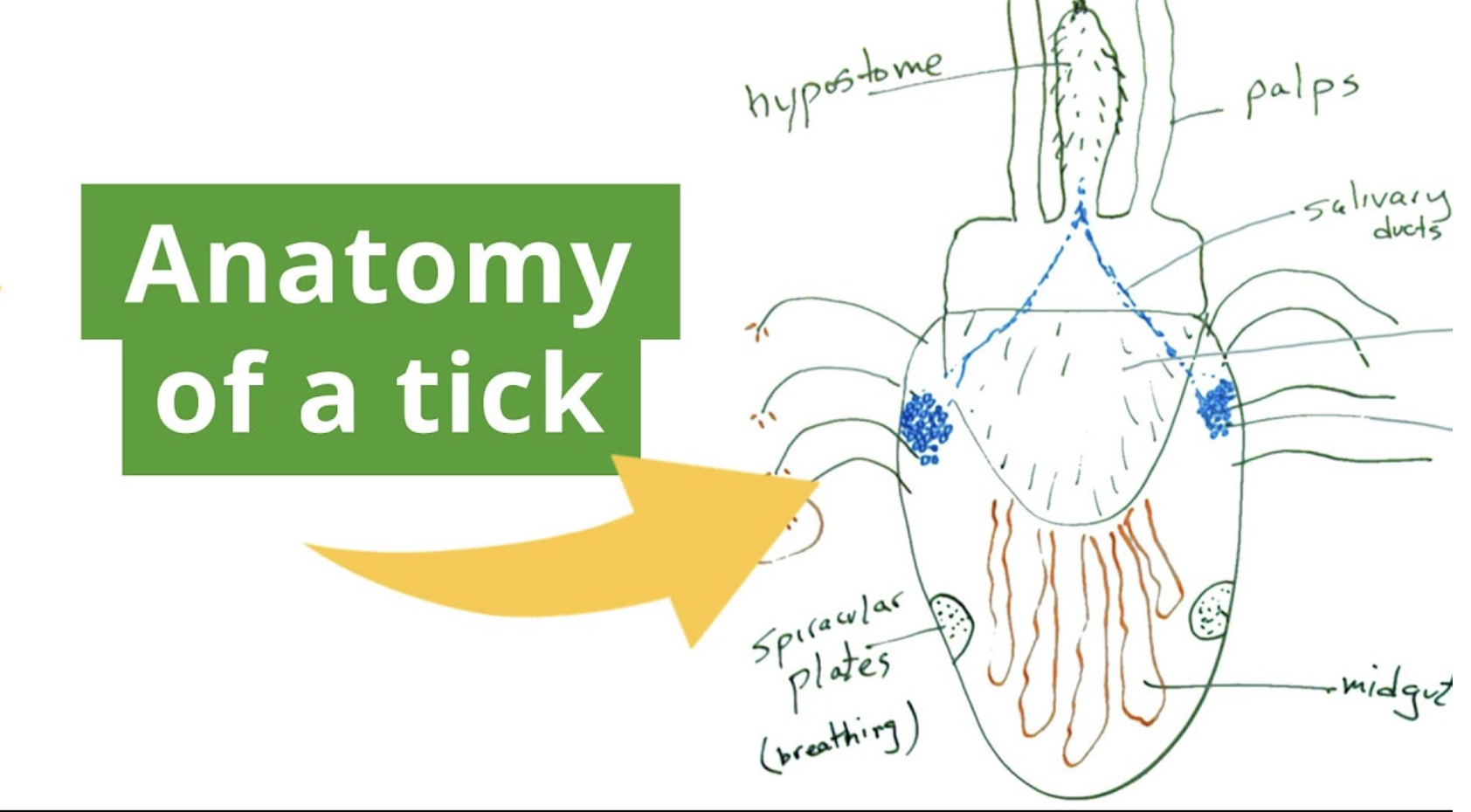
For a quick and simple video explaining tick anatomy and the toxic effects of permethrin on ticks, please check out this link to Dr. Thomas Mather (of the University of Rhode Island). His illustration above serves as an excellent schematic to demonstrate the general anatomy of the tick, basics of tick physiology, and the toxic effects of permethrin on the tick’s nervous system in 3 minutes plus. (The next Tick Tidbit will delve into further detail on permethrin.)
And as Dr. Mather points out, the key organ to pay attention to is the hypostome, flanked by the palps, the business end of the entire tick parasitic sucking and ingesting and infecting and allergenizing operation!
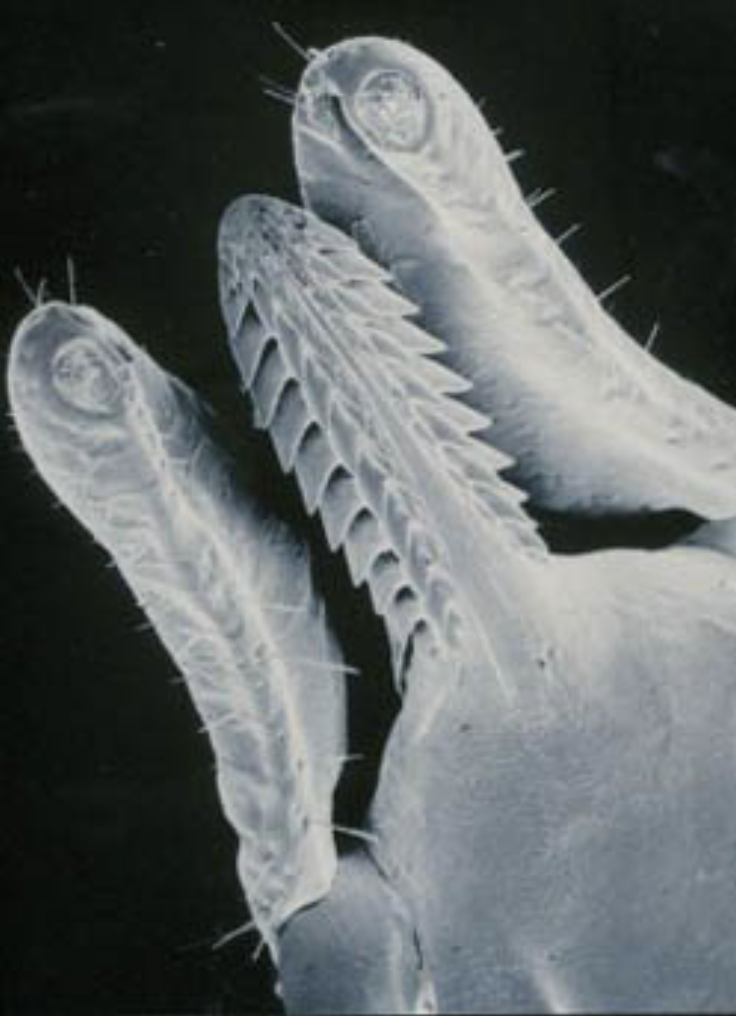
Barbed hypostome (center) of Ixodes holocyclus flanked by paired palps. [Wikipedia]
Further Anatomy/Pathophysiology details,courtesy Jindrich Chmelar, of theUniversity of South Bohemia in České Budějovice.*
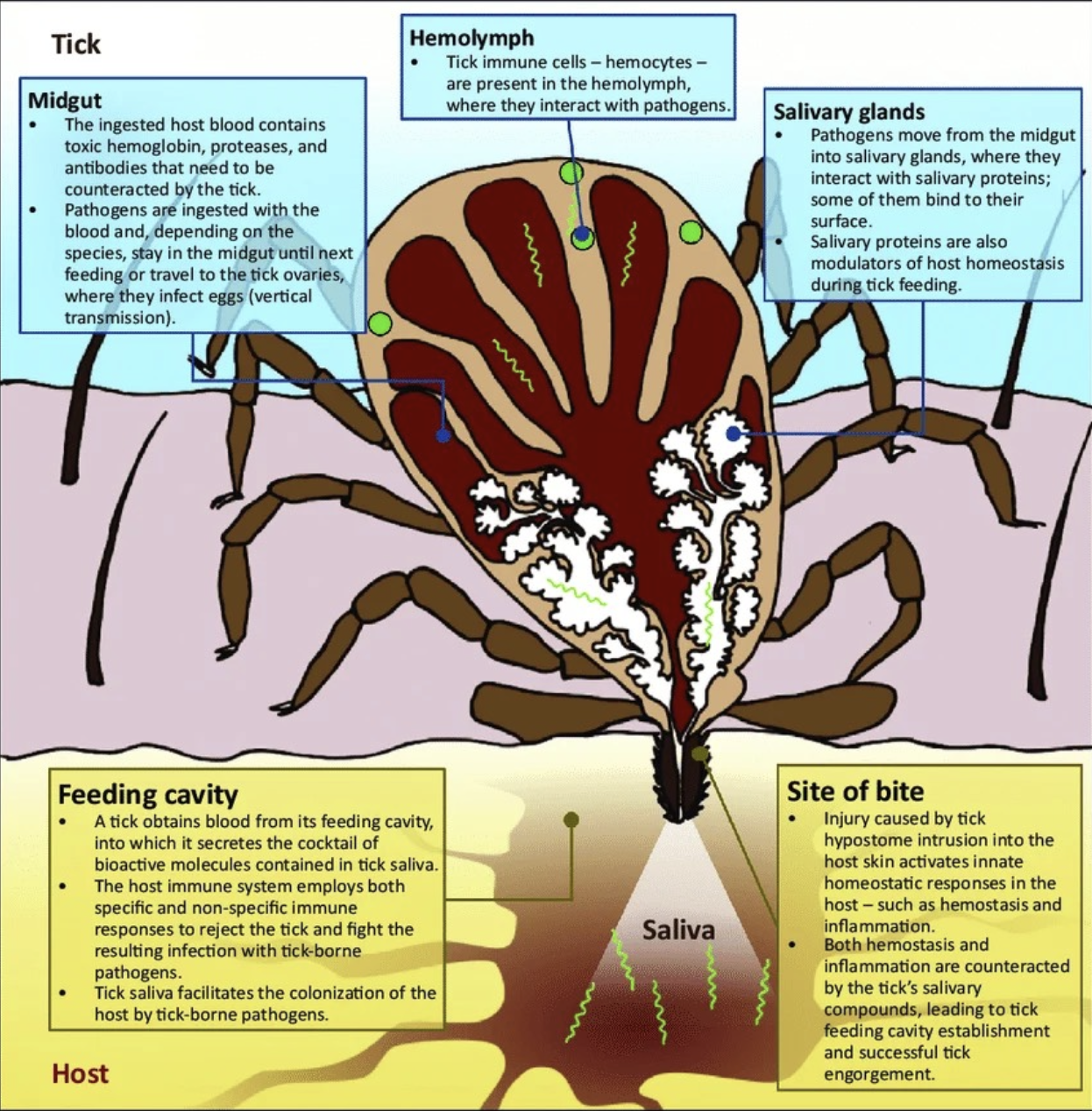
That the tick, having drunk of the animal or human, must then counteract the “toxins” in the ingested blood from the host, such as “toxic hemoglobin”, proteases and antibodies, may seem surprising. But apparently it occurs.
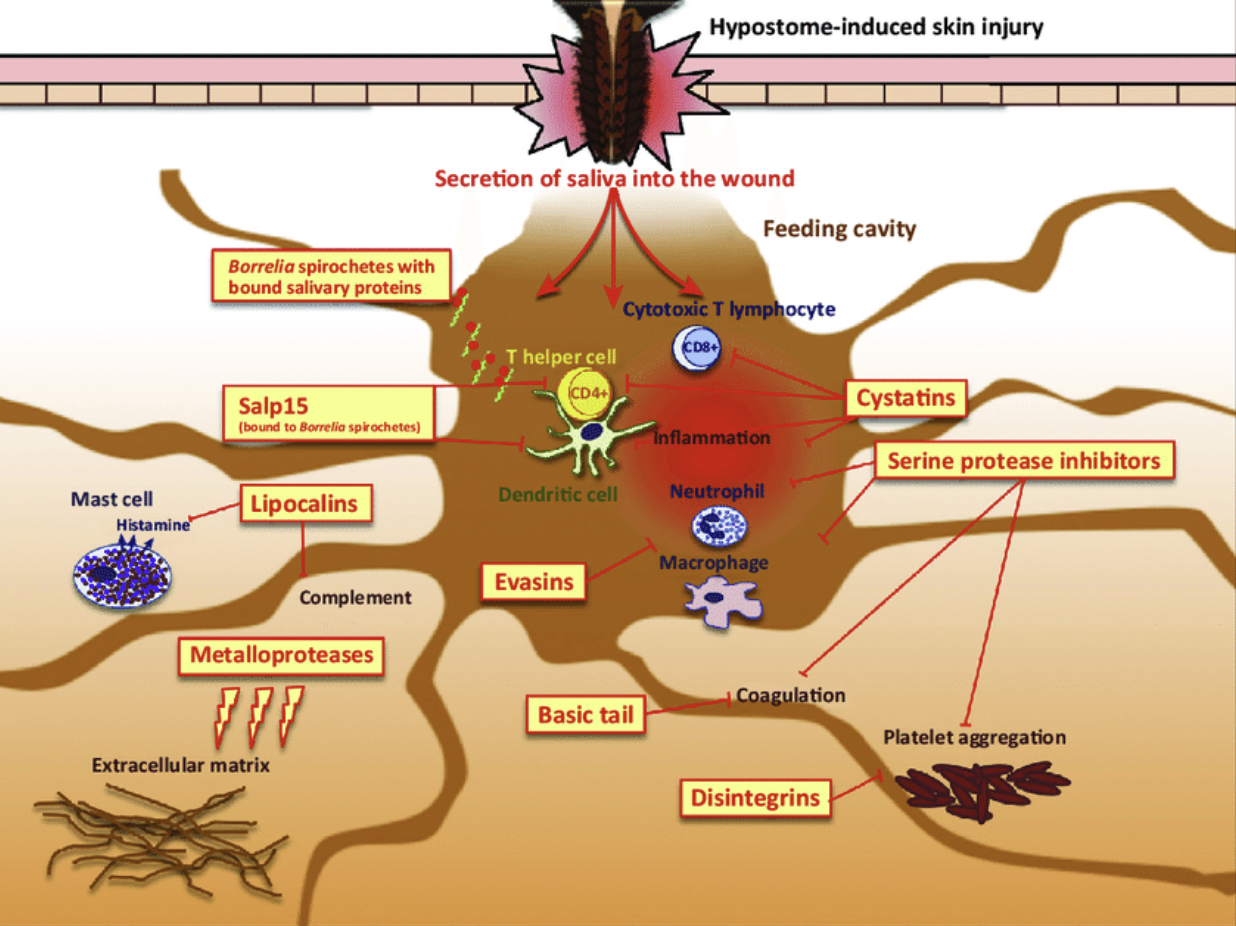
FYI (going counterclockwise):
Salp 15
Salp 15 is a 15-kDa salivary protein that has been identified in Ixodes scapularis and named Salp 15 after its calculated molecular mass. This protein has previously been shown to bind specifically to the dendritic cell-specific intercellular adhesion molecule-3-grabbing non-integrin. These data suggest that Salp 15 has properties that suppress the host immune system [Altmeyer’s Encyclopedia]
Lipocalin
The lipocalins are a family of proteins which transport small hydrophobic molecules such as steroids, retinoids, and lipids, and most lipocalins are also able to bind to complexed iron as well as heme. These proteins are found in gram negative bacteria, vertebrate cells, and invertebrate cells, and in plants.
Lipocalins have been associated with many biological processes, among them immune response, pheromone transport, biological prostaglandin synthesis, retinoid binding, and cancer cell interactions. [Wikipedia]
Metalloprotease
A metalloproteinase, or metalloprotease, is any protease enzyme whose catalytic mechanism involves a metal. Most metalloproteases require zinc, but some use cobalt. The metal ion is coordinated to the protein via three ligands. The ligands coordinating the metal ion can vary with histidine, glutamate, aspartate, lysine, and arginine. [Wikipedia]
Evasin
Evasins are a family of salivary proteins produced in parasitic ticks which are capable of shutting off the first steps of an immune response brought about by chemokines.
These proteins are injected into a tick's host to prevent a painful inflammation that might otherwise alert the host to the tick's presence. As chemokines have been implicated in a number of inflammatory diseases including atherosclerosis, asthma, rheumatoid arthritis, and cancer, chemokine-binding proteins such as evasins are being researched to assess their therapeutic potential as chemokine-targeting antagonists. [Wikipedia]
Distintegrins
Disintegrins are a family of small proteins from viper venoms (Ouch!) that function as potent inhibitors of both platelet aggregation and integrin-dependent cell adhesion. [Wikipedia]
Protease inhibitors
Protease inhibitors may be classified either by the type of protease they inhibit, or by their mechanism of action. There are now 81 families of inhibitors. [Wikipedia]
Cystatins
The cystatins are a family of cysteine protease inhibitors which share a sequence homology and a common tertiary structure of an alpha helix lying on top of an anti-parallel beta sheet. One effect of cystatins is to penetrate membranes. [Wikipedia]
Borrelia spirochetes with bound salivary proteins.
Applications to possible cancer treatments
To conclude on a brighter and more positive note, some of the components of tick saliva mentioned above show promise as possible mediators of cancer therapy. (To be discussed in a future edition of the Tick Tidbit).
____________________________
Review Comments and illustrations from:
*Jindřich Chmelař et al: Sialomes and Mialomes: A Systems-Biology
View of Tick Tissues and Tick–Host Interactions - Trends in Parasitology
Volume 32, Issue 3P242-254March, 2016