
Scabies! Chiggers! Tick Bombs! Oh My!
Recently the epidemic of Lone Star tick bites on Martha’s Vineyard has afflicted thousands of islanders and vacationing visitors.
As a non-medical consequence, a new form of tick paralysis may also be threatening the island. Not the rare neurological condition caused by tick bites that is cured almost instantly by removing the paralyzing tick from the patient’s body – but rather a paralysis of the real estate market.
Some islanders are afraid to invite their grandchildren to the island for summer revelry on the beaches or hiking trails. They fear their family members might acquire a tick-born infectious disease or a life-long meat allergy (Alpha-gal Syndrome) induced by a random lone star tick bite. (Thanks a lot, Grandpa!)
In any case, a walk along a lovely Vineyard forest trail may now bring back memories of Dorothy’s trek along the yellow-brick road to beg a favor from the Wizard of Oz.
Yo Wizard! It’s about this tick problem we got!
Lone Star Tick Bomb
One real (non-Hollywood-inspired) threat to island joggers and hikers and beach-goers is the Lone Star Tick Bomb. A tick bomb is a term used to describe a mass of tick larvae, commonly known as seed ticks. These tiny ticks can attach to a host in large numbers, making them particularly concerning for anyone who encounters them.
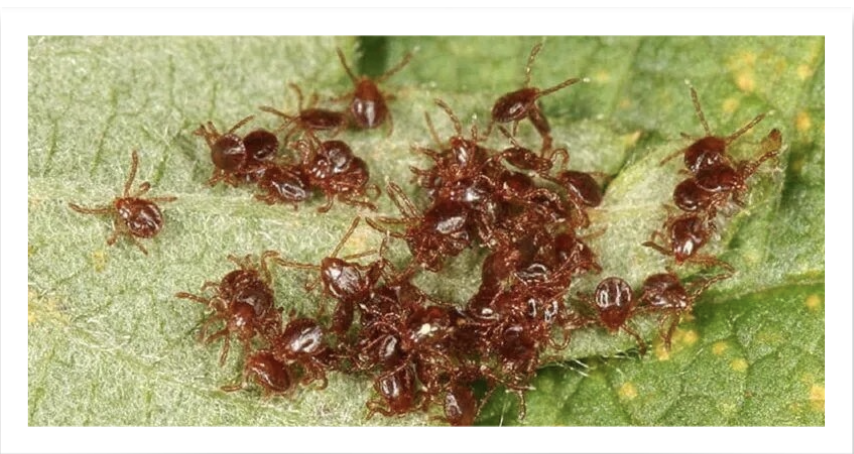
Lone Star Tick Larvae
Seed ticks typically refers to primarily the larval stage tick that has just hatched and hasn’t had its first blood meal. For this reason, larval stage ticks don’t tend to have any pathogens yet to pass along to their first meal host. The biggest issue with larval stage ticks, is the sheer number of them.
"When you find one, you usually make, I always jokingly say, 500 new best friends crawling up your leg." - Holly Gaff, a professor of biological sciences at Old Dominion University in Norfolk (Centers for Disease Control and Prevention).
There may be tiny nymphs in or near the tick bomb, and these have theoretically already had a blood meal - in which case they can carry a tick pathogen.
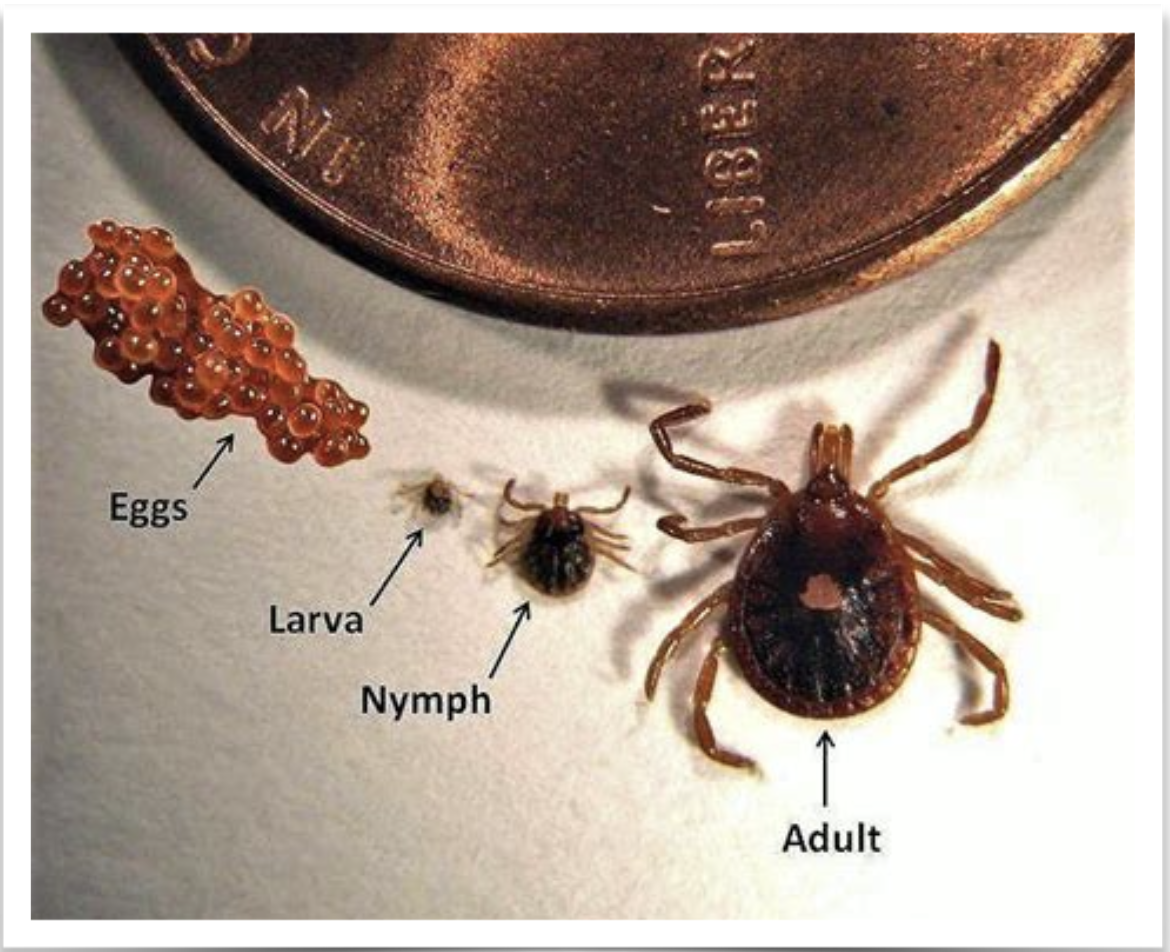
An up-close and personal description of stepping into a tick bomb is available at Tick Bomb: What Every Hiker Should Know – Victoria's Travels.
Scabies
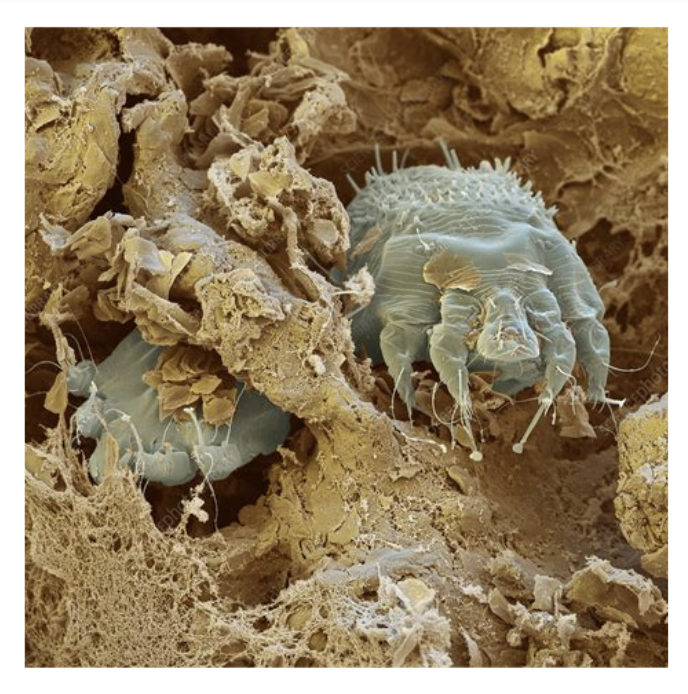
Scabies Mite - handsome devil, ain’t he?
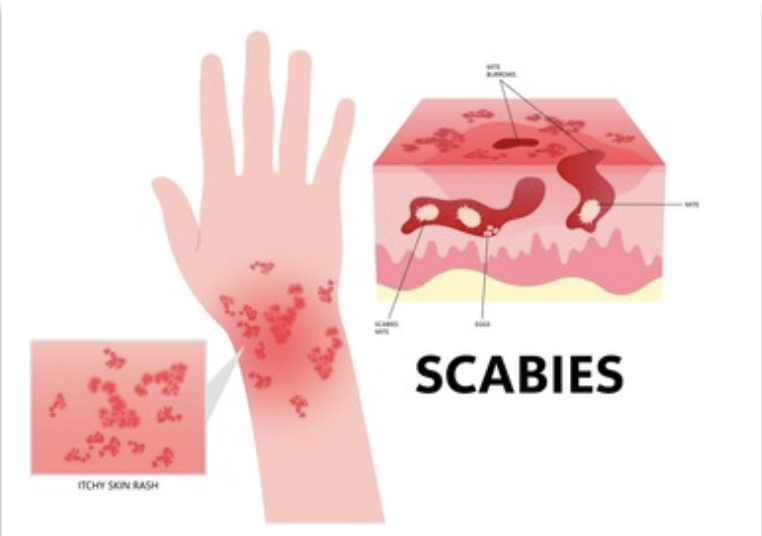
Several years ago, when the first wave of lone star ticks invaded the island, we ran across what seemed to be scabies (Sarcoptes scabiei) rashes - in retrospect they were likely patients who had experienced tick bombs. The scabies rash is similar to the lone Star larva infestation - super itchy. It’s caused by the Scabies mite. But scabies is usually transferred from human-to-human and most often identified by inter-digital web space lesions on the hands - between the fingers, which in time march up the arms. In case you’re curious and want to know about disgusting details, the major stimulants to pruritus in scabies are the proteases in mite feces (scybala). These activate keratinocytes to produce pruritogens, especially TSLP (thymic stromal lymphopoietin) which start the itching cascade. Permethrin works well to kill the mites and stop the itching.
Chiggers
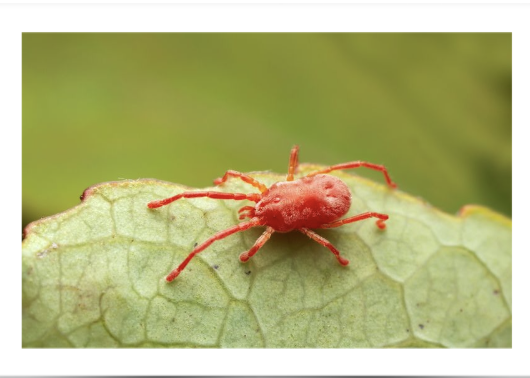
Chiggers (trombiculidae) are also a species of mite, and are a close relative to spiders and ticks. Chiggers are microscopic and are almost invisible to the naked eye. Once chiggers hatch from eggs (larva), the mites feed on the skin tissue of a host (human or animal) before falling off and turning into an adult mite.
Chiggers live outdoors on plants in wooded or grassy areas, typically around water. They are most active during the summer months when temperatures are hot. Apparently the itching of a chigger bite occurs after they have bitten the victim. Chiggers are often mistaken for bloodsucking parasites, but their feeding method is quite different. They do not burrow into the skin, and their bites can cause discomfort, but they are not harmful in terms of disease transmission. The bites often form a line or patch on feet or ankles.
Oak Mites
Oak mites (Pyemotes Herfsi) - also known as Oak Leaf Itch Mites - cause human rashes that are somewhat distinct from Lone Star tick bites or chigger bites. Oak mites are found near oak trees, especially pin oaks. They feed on the larvae of flies (midges), the eggs of which are deposited on oak leaves and form swellings called galls along the veins or edges of the oak leaves. These mites are so light and tiny, they can be blown by the wind for miles. So you don’t need to be close to an oak tree to be bitten.
The bite and subsequent dermatitis are characterized as an itchy, raised, solid lesion (papule) surmounted by a clear, pinhead-sized vesicle that later becomes clouded by purulent material. (See illustration below.) Excoriated lesions may predominate due to the extreme pruritus. There appears to be a delayed reaction (10-28 hours) to the bites, with no initial prickling sensation when bitten.
The affected areas usually include the neck, arms, shoulders, and upper torso. The rash resolves in one to seven days, with some reporting resolution at 10 to 14 days.
On the Vineyard, oak mites might be blamed for rashes caused by lone star tick bombs.