
Cardiac Lyme disease, its clinical presentation, pathophysiology & treatment
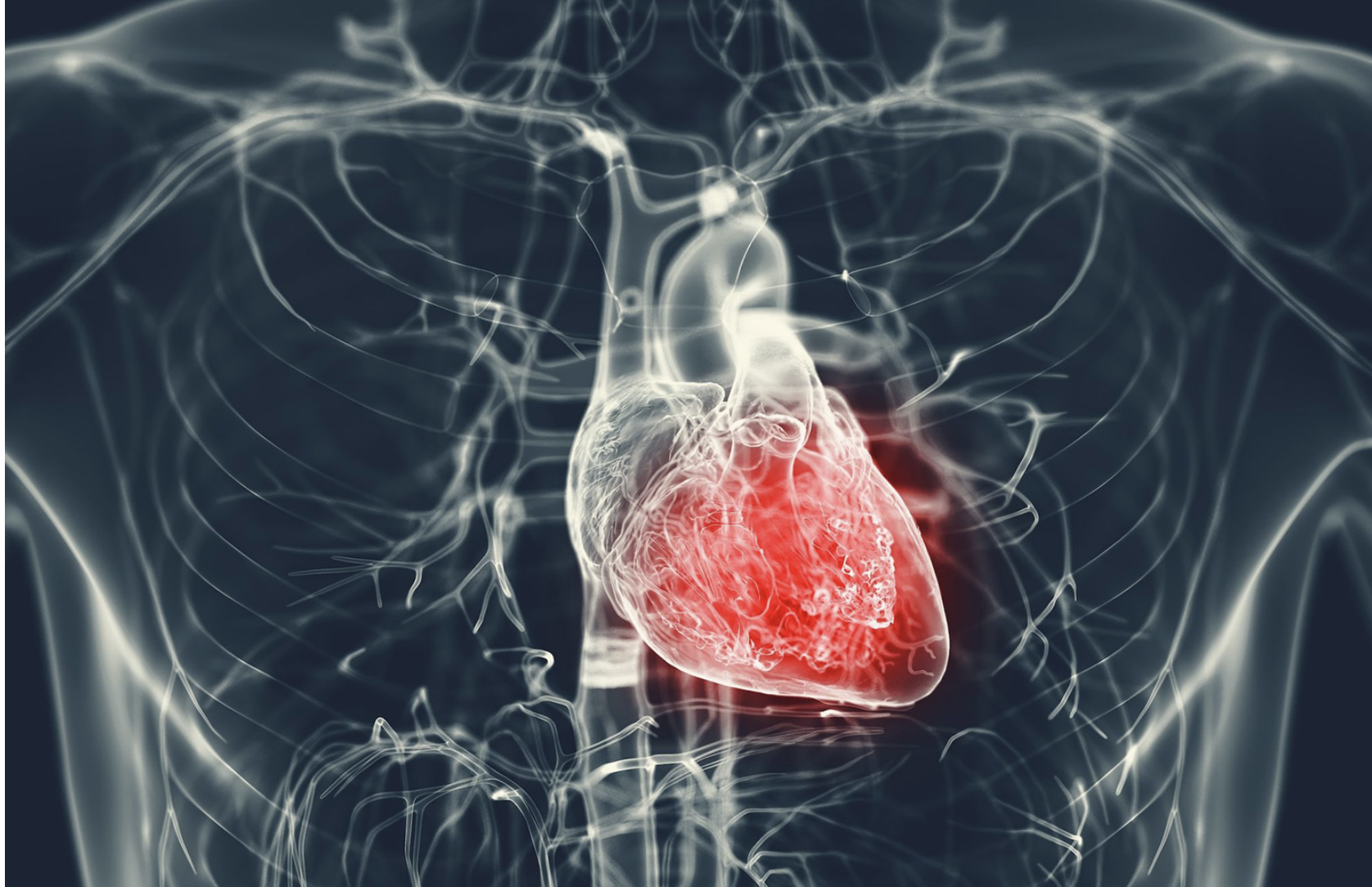
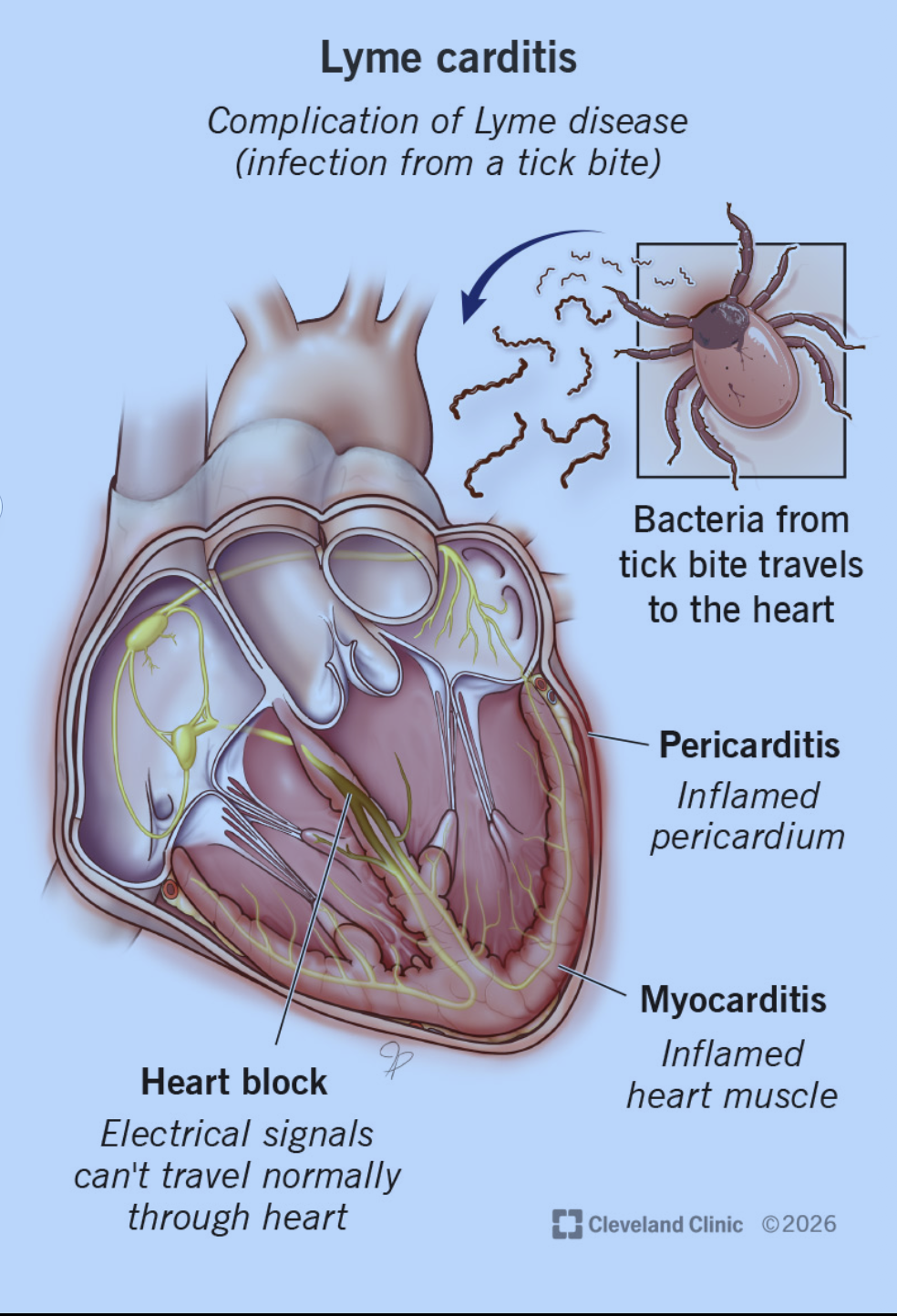
Borrelia spirochetes demonstrate tropism for cardiac tissue in the AV nodal region, precipitating conduction disturbances and myocarditis
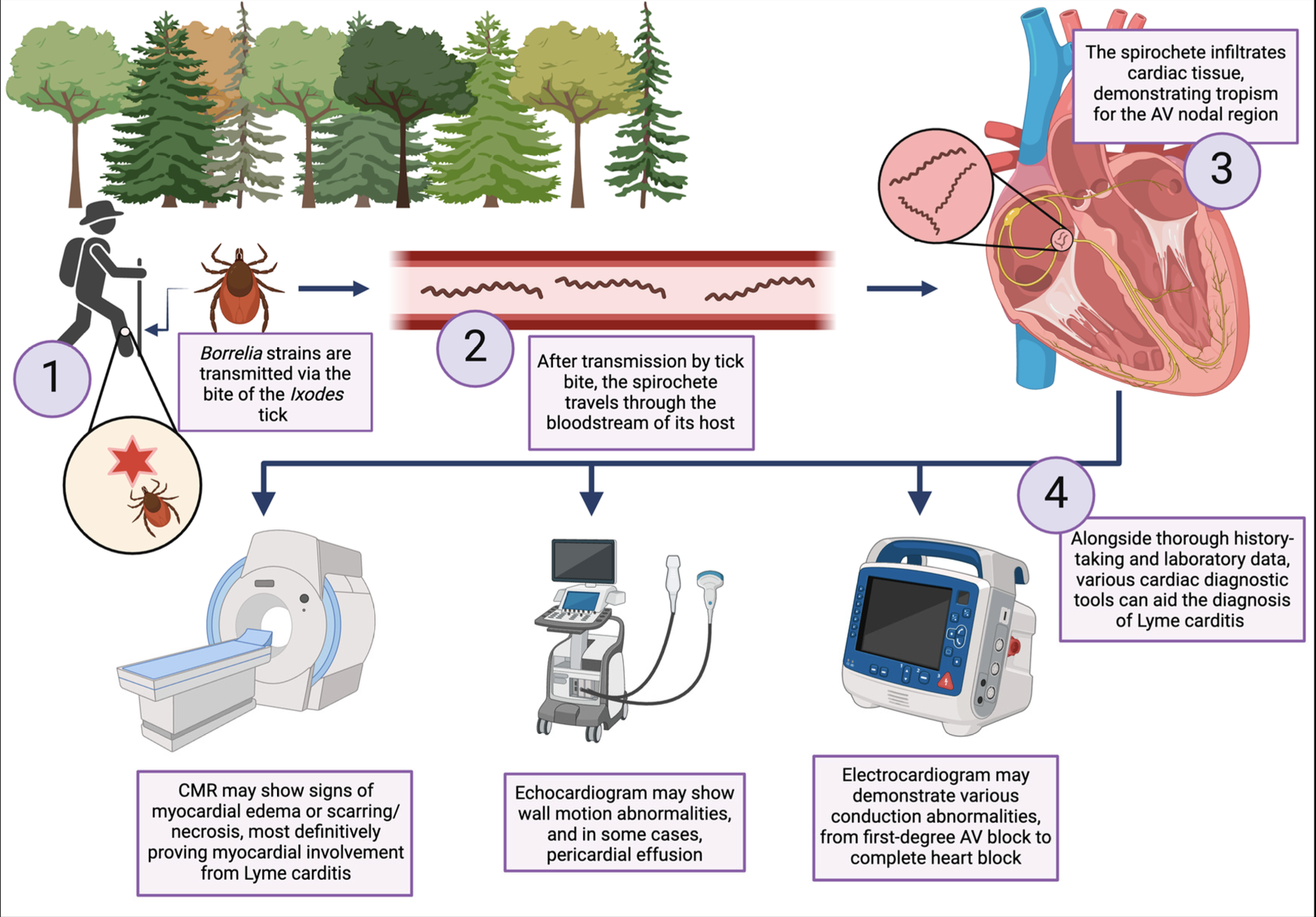
The CDC and Up-to-date state that it is likely Lyme Carditis in America occurs in 1% of patients presenting with Lyme disease, as compared to the incidence of Neurological Lyme disease, which occurs in 15% of Lyme cases. Key point: Lyme Carditis can be fatal. [2]
Clinical Presentation
“The clinical presentation of LC is highly variable and may entail a myriad of non-specific symptoms that can be easily overlooked or attributed to more common etiologies including acute coronary syndrome, medication misuse, or other infectious diseases. Initial signs following the tick bite can include ECM rash along with constitutional symptoms such as fever, chills, and malaise. Cardiac symptoms typically manifest weeks to months after the initial contraction of LD, in the early disseminated stage. Symptoms of chest pain, palpitations, lightheadedness, or syncope may be indicative of AV block or inflammation of the myocardium or pericardium.
“The characteristic ensuing cardiac pathology is blockage of AV nodal conduction, which can progress from first-degree to complete third-degree block. First- degree AV block consists of a delay between the signaling in the sinoatrial node and ventricles—most often asymptomatic and only notable on ECG. Further progression to second-degree AV block can result in intermittent and symptomatic bradycardia. Low-grade (Mobitz Type I) second-degree heart block often resolves over time, while high-grade (Mobitz Type II) blockages, when permanent, require pacemaker implantation. Third- degree or complete AV block requires pacemaker implantation and may precede hemodynamic instability. In the acute stages of infection, AV block, including advanced high-degree AV block, can be reversible if treated with timely and targeted antimicrobial therapy — without the need for pacemaker implantation. Therefore, rapid diagnosis and tailored therapy are of utmost importance.” [1]
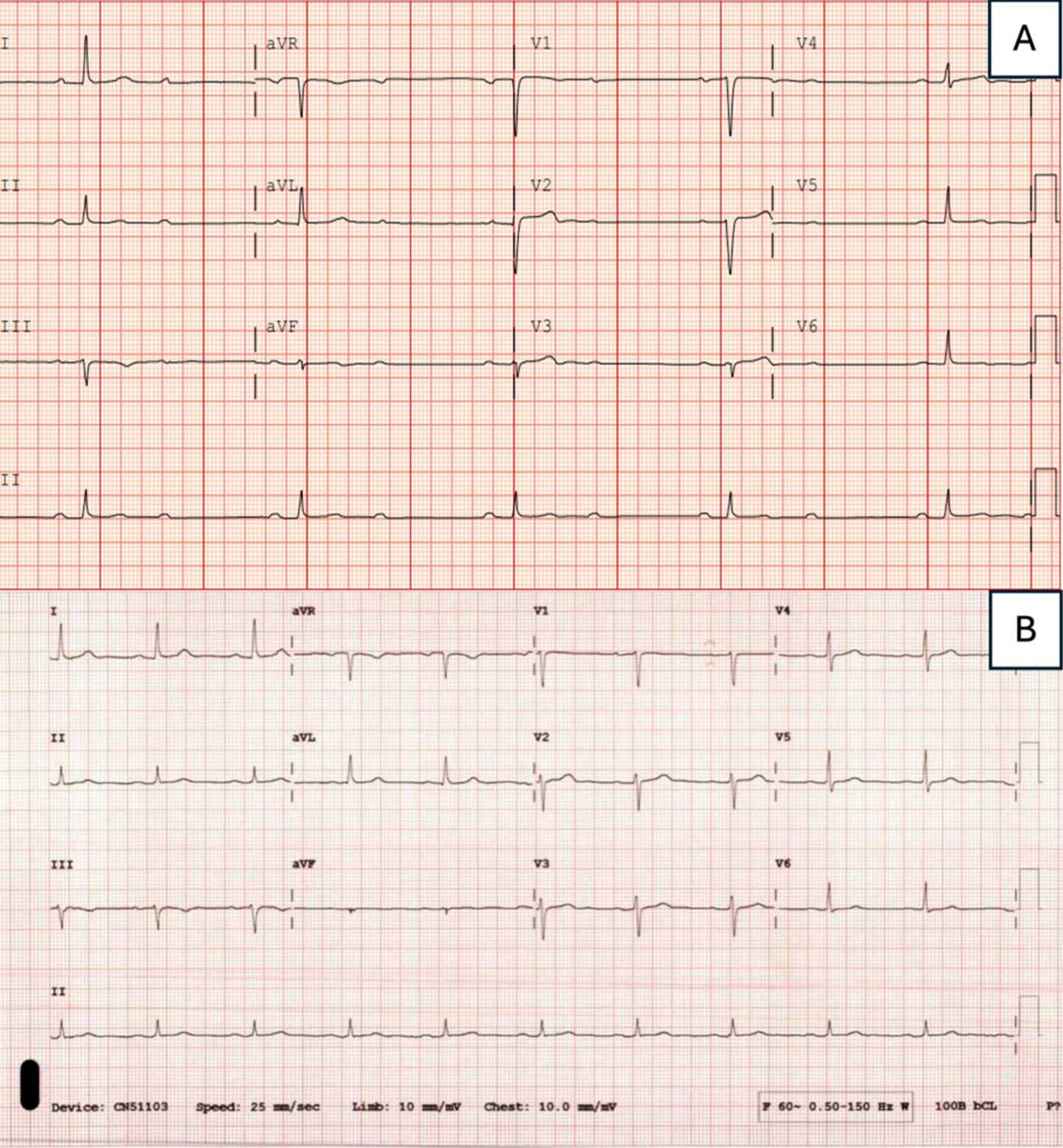
Electrocardiogram of LC Patient
The baseline ECG (A) was performed at presentation to the emergency department and shows 2:1 AV block (Lead II). Follow-up ECG (B) was performed after a three-week course of oral doxycycline and demonstrates resolution to normal sinus rhythm with borderline first-degree AV block. [1]
Pathophysiology
Once the myocardium is colonized, an exaggerated immune response is induced, causing cardiac injury. The lymphocytic infiltration in Lyme carditis, both in humans and in animals, is usually more predominant compared to the presence of the spirochetes. Additionally, murine models have demonstrated an autoimmunity response can be triggered against the heart by IgM antibodies directed against B. burgdorferi antigens. This phenomenon may occur due to a cross-reaction between antigens of the Spirochetes and endogenous cardiac proteins [2].
Pathology
The pathology reports on fatal Cardiac Lyme disease reveal: “Cardiomyocyte minimal necrosis, T cells outnumbered B cells, plasma cells were prominent, and mild fibrosis was present. Spirochetes in the cardiac interstitium associated with collagen fibers and co- localized with decorin - (Decorin is a collagen fibril binder, which impacts tissue strength and elasticity.) [3]
Serology
The primary immune response in Lyme disease is characterized by the appearance of IgM within one to two weeks and of IgG within two to six weeks following the onset of erythema migrans. However, only 20–40% of patients with early localized Lyme disease are seropositive at the time of presentation, and serological testing is not required in patients presenting with a clinical diagnosis of erythema migrans (especially single, but also multiple erythemas).
During the early disseminated phase, most patients present both IgM and IgG seropositivity against B. burgdorferi, and serological tests are helpful to support the diagnosis. Eventually, at the time of the late disseminated phase, IgM tests may be negative, while IgG response is usually present [47]. Lyme carditis occurs during the early disseminated phase, so patients are usually seropositive by the time of evaluation. Patients with a negative result are unlikely to have Lyme disease; however, if antibiotic therapy has not been initiated and the clinical suspicion persists, serologic testing may be repeated approximately three weeks later [4].
Treatment
Recommendations by Uptodate: Symptoms, second- or third-degree AV block, PR ≥300 milliseconds, or another arrhythmia: hospitalize, use cardiac telemetry, and begin intravenous antibiotics. Asymptomatic first-degree AV block with PR <300 milliseconds: oral treatment for the full course is reasonable.
Severe or higher-risk carditis: The usual initial regimen is ceftriaxone 2 g IV once daily until high-grade AV block has resolved and the PR interval is less than 300 milliseconds. Once improving, switch to oral antibiotics to complete 14 to 21 total days of antimicrobial therapy.
Mild Case (1st degree AV block with PR interval <300 milliseconds) Doxycycline 100 mg p.o. 14-21 days, amoxicillin 500 mg t.i.d. 14-21 days, Cefuroxime 500 mg b.i.d. 14-21 days.
Children: Doxycycline 4.4 mg/kg b.i.d. for 14-21 days, Amoxicillin 50 mg/kg t.i.d. for 14-21 days, cefuroxime 30 mg/kg b.i.d. for 14-21 days. [5]
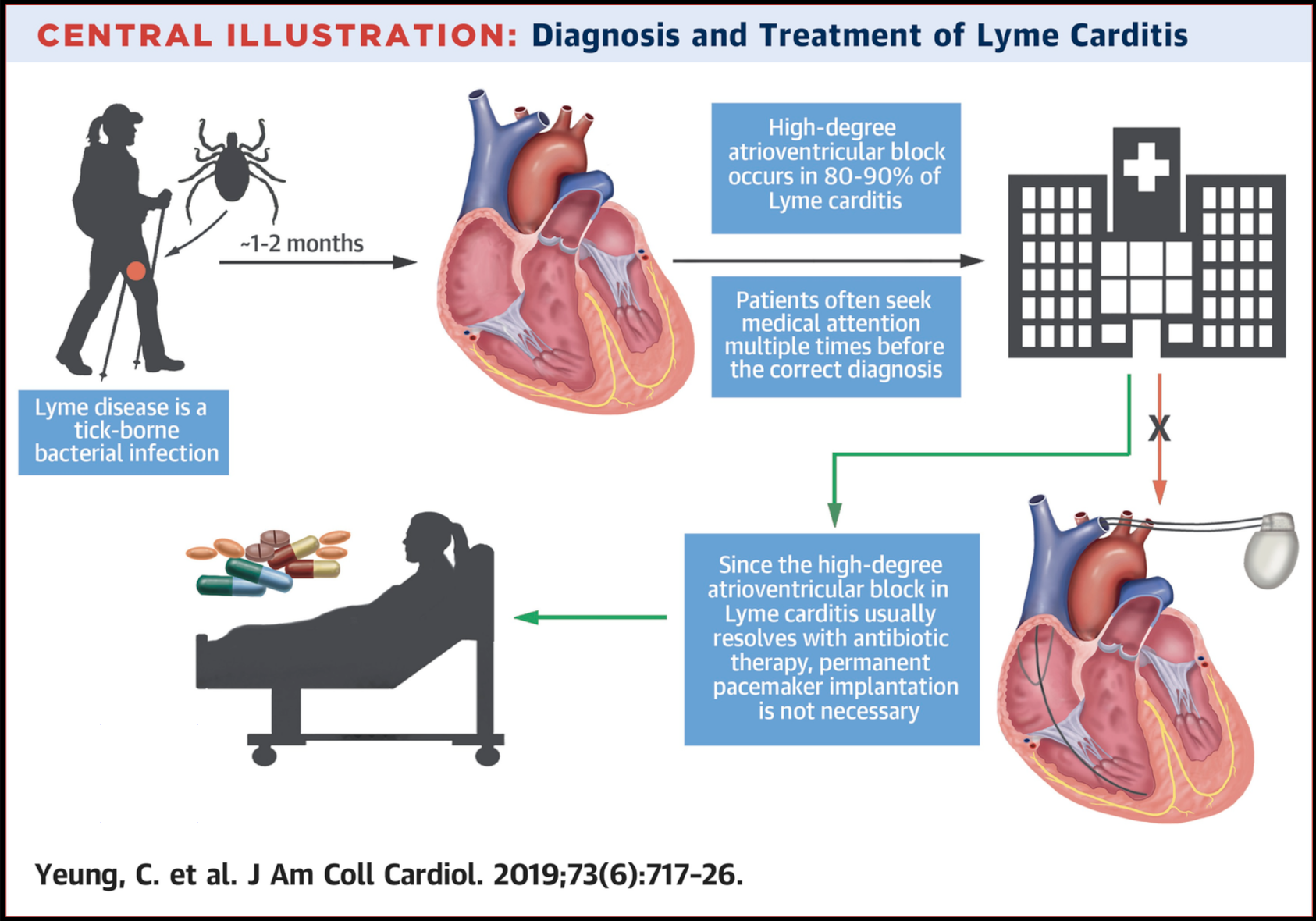
References
[1} Cynthia Yeung, BSc, and Adrian Baranchuk, MDJACC JACC, Volume 73, Number 6
[2] Uptodate 10/17/2026
[3] Cardiac tropism of Borrelia burgdorferi: an autopsy study of sudden cardiac death associated with Lyme carditis. Artis Muehlenbachs, The American Journal of Pathology, Vol. 186, No. 5, May 2016
[4]. Raveche, E.S.; J. Clin. Microbiol. 2005, 43, 850–856
[5} CDC, Sept. 14, 2026